Entry 19 / Symbols & amulets
Tyet
A knotted sign of Isis’s protection.
The tyet, also written tit or tjet, is commonly known as the knot of Isis. The sign resembles a looped knot with two folded side elements. By the New Kingdom it was clearly associated with Isis and her protection, and it was used as a funerary amulet.
Take a closer look ↓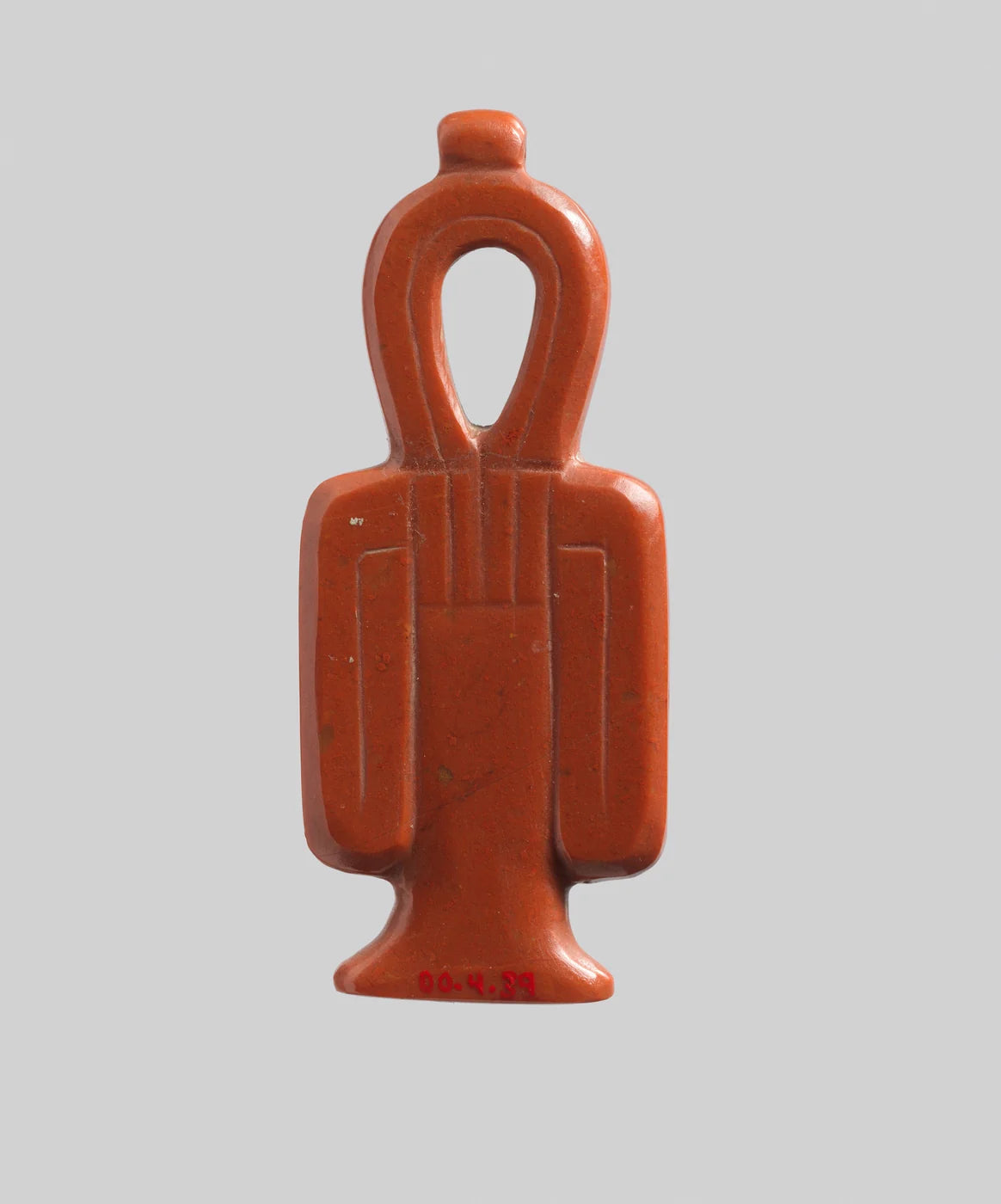
Written in signs
Name & hieroglyphs
- Transliteration
- Tjt
- Familiar names & readings
- Tyet / Tit / Tiet
One documented spelling, shown in a simple left-to-right line. Ancient spellings and the arrangement of signs varied. Transliteration records consonants; familiar readings supply conventional vowels.
Tyet, tit and tiet are modern ways of rendering the Egyptian term tjt. The dictionary spelling combines sound signs with the familiar loop-and-folded-arms emblem. Its association with Isis also gives it the descriptive names “knot of Isis” and “blood of Isis.”
Those descriptive names explain ritual connections rather than a settled word-by-word etymology. The precise object represented by the shape is uncertain. The name should not be expanded into a confident literal translation such as “eternal life” simply because the emblem resembles an ankh.
01 / The story
What is the knot of Isis?
The tyet appears to represent a knotted piece of cloth, although its earliest meaning remains uncertain. Its later relationship with Isis is much clearer. The sign offered a compact way to invoke the protection of a goddess whose stories emphasise restoration and care.
Red was especially significant in funerary instructions for the amulet. The Book of the Dead’s chapter 156 calls for a red stone knot placed at the throat of the deceased. Surviving examples are not all identical, so a prescribed material should not be treated as the only form ever used.
02 / The story
A small difference in the outline
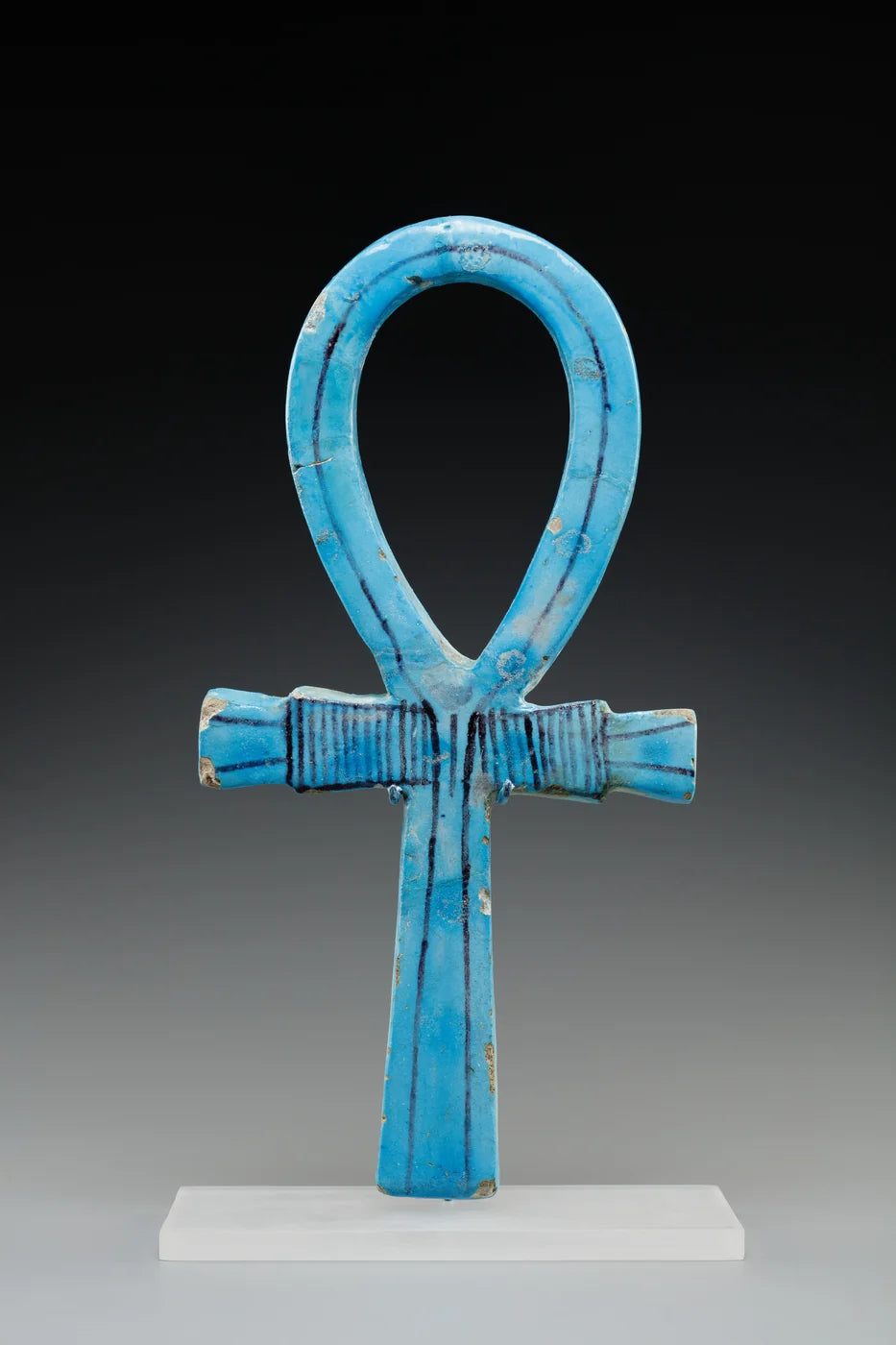
The tyet and ankh both have a loop at the top, making them easy to confuse at first glance. Look at the sides. The ankh extends horizontally across; the tyet’s side elements bend down beside the central stem.
The jasper example illustrated here makes those folds especially clear. Its material and shape belong to a particular ancient amulet, while modern pendants may simplify the outline. The useful comparison is the structure of the sign, not whether two pieces happen to share a colour.
Train your eye
Three details to notice.
A top loop
The upper loop is shared with some other signs, so it is only the first clue.
Folded-down sides
These hanging elements are the most useful difference from an ankh.
A central stem
The long middle element completes the knot-like silhouette.
A little more understanding
Good questions.
Clear answers.
Are tyet and tit different symbols?
No. Tyet, tit and tjet are spellings used for the same Egyptian sign.
Is a tyet just another ankh?
No. Their outlines and associations differ. The tyet is linked particularly with Isis, while the ankh expresses life.
Must a knot of Isis be red?
Red stone was prescribed for a particular funerary use, but ancient examples and later representations vary. Colour alone is not an identification rule.
What does the name tyet mean?
Tyet is a conventional reading of the Egyptian term tjt. Its deeper derivation is uncertain; “knot of Isis” is a descriptive name tied to its form and associations.
How is tyet written in hieroglyphs?
A dictionary spelling uses sound signs followed by the looped tyet emblem. The emblem belongs to the writing system as well as appearing as an amulet.
Why is it also called the blood of Isis?
That name reflects its ritual association with Isis and the protective use of red amulets. It describes religious meaning rather than proving what object first inspired the shape.
How can I recognise a tyet?
Look for a loop at the top, a central hanging element and side arms that turn down. Those lowered arms distinguish it from the ankh’s horizontal crossbar.
What did a tyet amulet offer its wearer or owner?
It was associated with Isis’s protection, particularly in funerary settings. Its historical purpose is a religious belief, not a guarantee about a modern reproduction.
From the library to your home
Keep the story close.
Explore pieces in our shop connected with this subject. The museum objects above are historical references; shop items have their own materials and descriptions.
Explore Isis and her imagery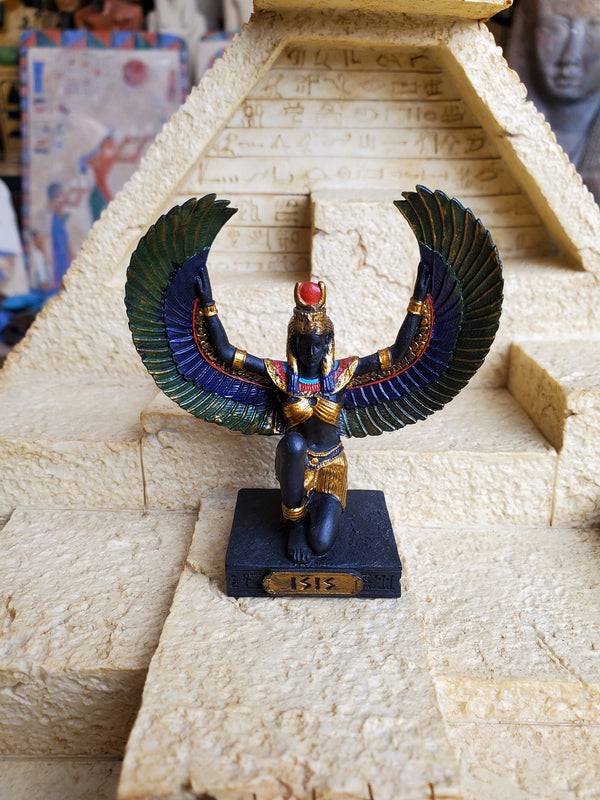
Follow the connections
There’s more to this story.
The evidence behind the entry
Bibliography & image credits
Museum records, language references and published research used for this entry. Name spellings and interpretations are documented here alongside the historical sources.
- The Met — Tit amulet, 00.4.39
- Michael C. Carlos Museum, Emory University — Isis knot amulet
- Thesaurus Linguae Aegyptiae — Tjt, lemma 169740 (accessed 20 October 2026)
Photograph: Tit amulet, The Metropolitan Museum of Art, 00.4.39. Gift of Egypt Exploration Fund, 1900. CC0 / Public domain. Resized for display; the complete photograph is preserved.