Entry 18 / Symbols & amulets
Djed pillar
Stability made visible.
The djed is a pillar-like Egyptian sign associated with stability and endurance. In later religious interpretation it was closely connected with Osiris and understood as his backbone. Djed amulets could express the wish for lasting strength and renewed life, particularly in funerary settings.
Take a closer look ↓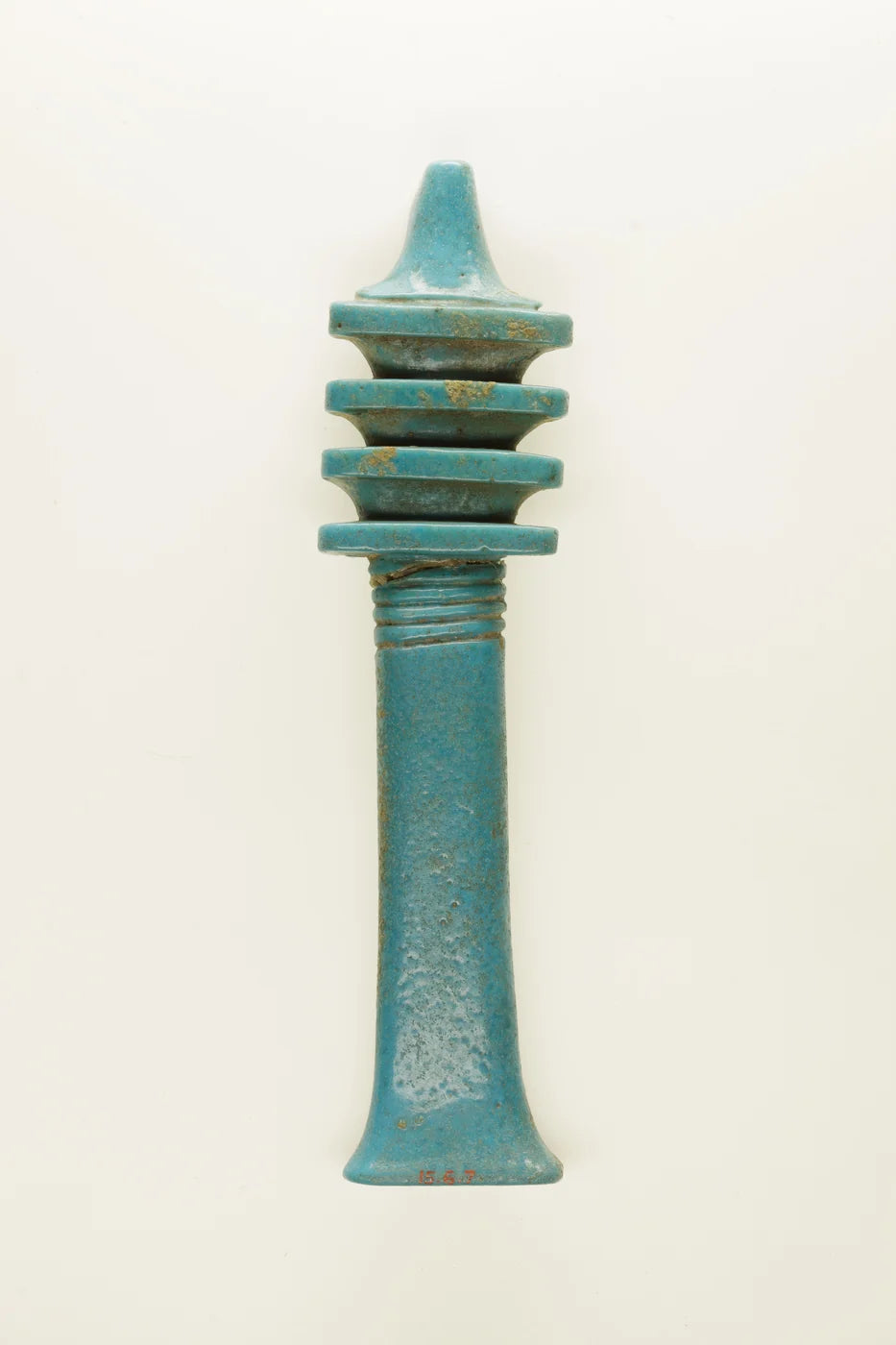
Written in signs
Name & hieroglyphs
- Transliteration
- Ḏd
- Familiar names & readings
- Djed
One documented spelling, shown in a simple left-to-right line. Ancient spellings and the arrangement of signs varied. Transliteration records consonants; familiar readings supply conventional vowels.
Djed is the conventional reading of ḏd, the name of the pillar and a word associated with endurance or stability. The dj represents the Egyptian consonant ḏ; the e helps modern readers pronounce a consonantal spelling.
The pillar sign, followed here by a short word-marking stroke, can write the term itself. Its later identification with Osiris’s backbone belongs to religious interpretation. It does not mean that “backbone of Osiris” is the literal linguistic breakdown of the word djed.
01 / The story
What does the djed mean?
The djed translates an abstract wish into a firm vertical shape. Its association with stability made it suitable for amulets and combinations of sacred signs. Joined with an ankh and a was sceptre, it could contribute endurance to a wider wish for life and dominion.
The sign’s earliest origin is not completely settled. Interpretations include a stylised bundle or pillar. Its later identification with the backbone of Osiris is especially important in funerary imagery, but that later meaning should not be treated as a complete explanation of its beginnings.
02 / The story
Osiris and the raising of the pillar
A ritual of raising the djed connected upright stability with the restoration of Osiris. The image can therefore express more than standing still: it can suggest being restored to an enduring condition after disruption or death.
The faience amulet shown here reduces that large idea to a portable object. Its repeated horizontal bars make the silhouette distinctive. Looking at the form alongside the Osiris entry helps link a seemingly abstract sign with a deity and a religious story.
Train your eye
Three details to notice.
Four horizontal tiers
The stacked crossbars near the top are the most recognisable feature.
A vertical base
The bars sit on a pillar or stem, sometimes widening toward the bottom.
Combinations of signs
A djed may appear beside an ankh, tyet or other symbols, each contributing its own meaning.
A little more understanding
Good questions.
Clear answers.
Is the djed the backbone of Osiris?
It was understood that way in later Egyptian religious interpretation. Its earlier origin is less certain.
Does the djed symbolise strength?
Stability and endurance are the more precise starting points. Strength can be part of how a modern reader understands those ideas.
How is a djed different from an ankh?
The ankh writes life and has a looped top. The djed is a tiered pillar associated with stability. They can appear together without meaning the same thing.
What does the name djed mean?
The Egyptian term ḏd is associated with endurance and stability. Djed is a conventional modern reading, with an added e to make the consonants easier to pronounce.
Can the djed pillar function as writing?
Yes. The pillar is a hieroglyph as well as an emblem and amulet form. It can write the term associated with stability.
What are the bars across the top of a djed?
The stacked crossbars are a defining feature of its visual form. They help distinguish the pillar from a plain column or sceptre.
What was the raising of the djed?
It was a ritual act involving the erection of the pillar. In its Osirian setting it expressed restoration and enduring divine life.
Why are djed and tyet symbols sometimes paired?
They could evoke Osiris and Isis together. Their pairing places stability and protective divine associations within the same visual setting.
From the library to your home
Keep the story close.
Explore pieces in our shop connected with this subject. The museum objects above are historical references; shop items have their own materials and descriptions.
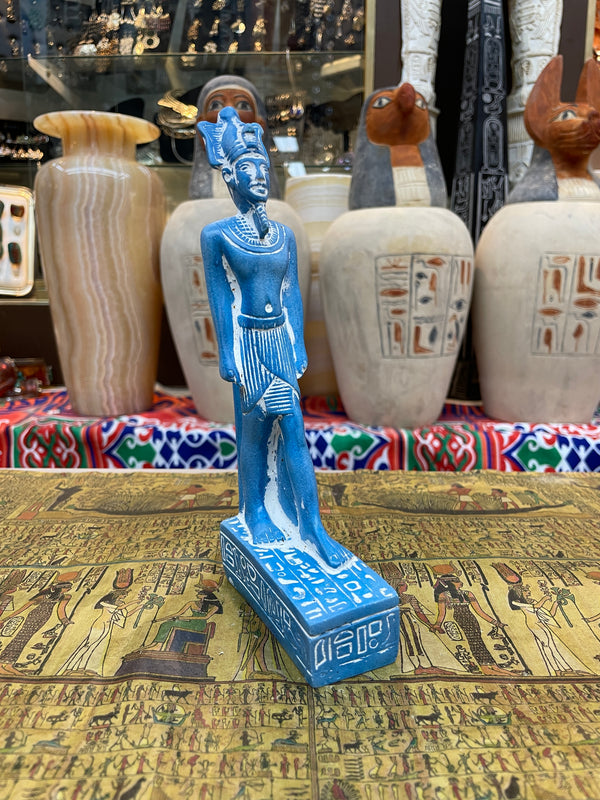
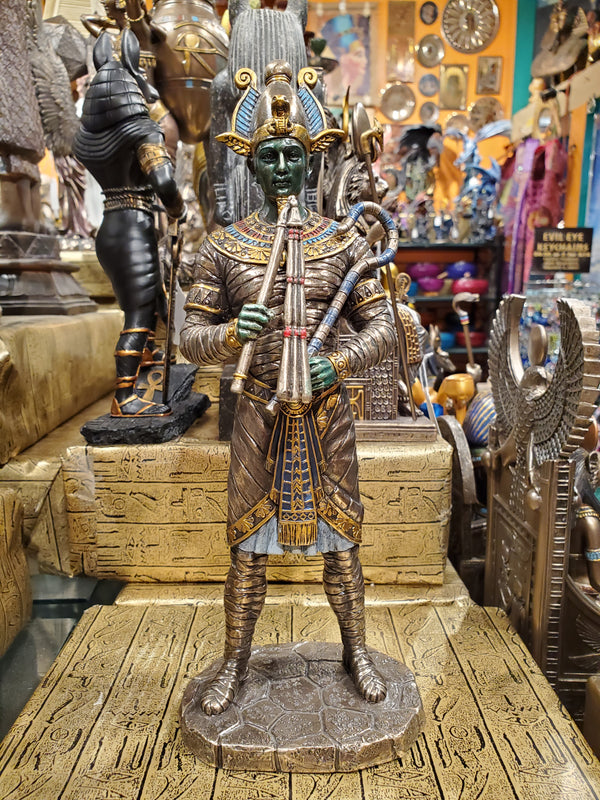
Explore Osiris and his imagery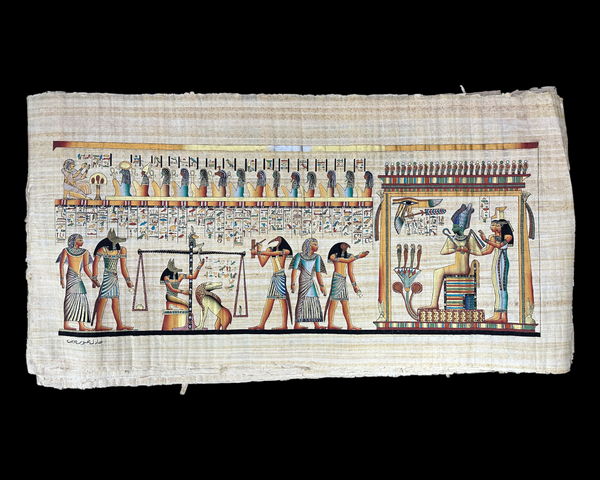
Follow the connections
There’s more to this story.
The evidence behind the entry
Bibliography & image credits
Museum records, language references and published research used for this entry. Name spellings and interpretations are documented here alongside the historical sources.
- The Met — Djed pillar amulet, 15.6.7
- Egyptian Ministry of Tourism and Antiquities — Djed column
- British Museum — Combined ankh, djed and was amulet
- Thesaurus Linguae Aegyptiae — Ḏd, lemma 185830 (accessed 20 October 2026)
Photograph: Djed Pillar Amulet, The Metropolitan Museum of Art, 15.6.7. Gift of Mrs. Frederick F. Thompson, 1915. CC0 / Public domain. Resized for display; the complete photograph is preserved.