Entry 02 / Gods & goddesses
Isis
Magic, devotion and the power to protect.
Isis was a goddess of magic, protection and motherhood. In the story of Osiris, she helps restore her husband and protects their son Horus. Her images range from a woman wearing a throne-shaped sign to a winged protector or a mother nursing a child.
Take a closer look ↓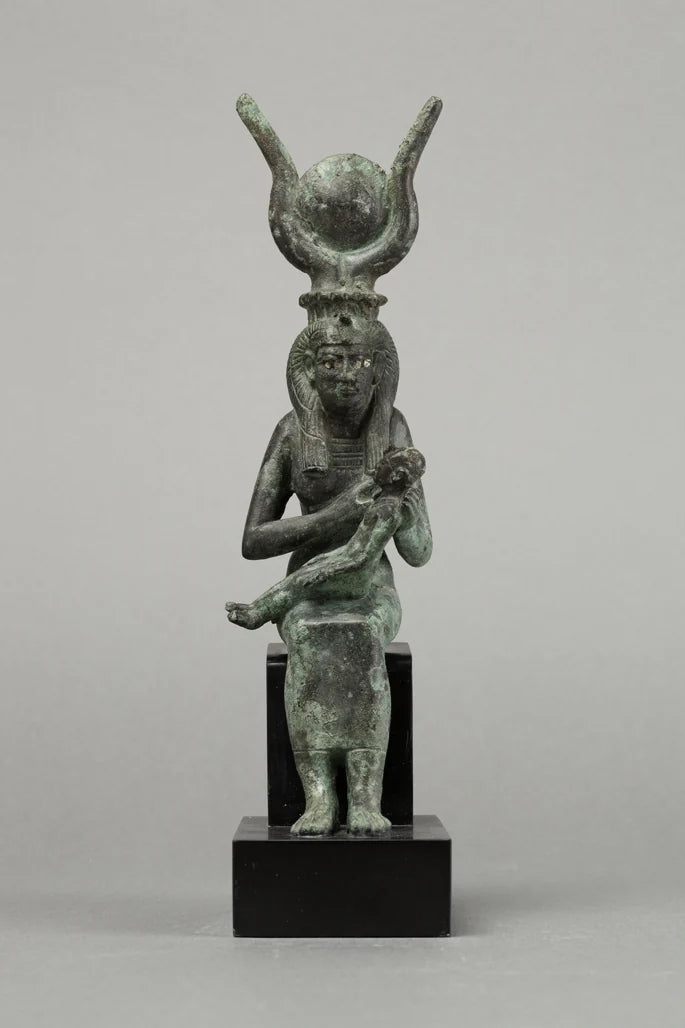
Written in signs
Name & hieroglyphs
- Transliteration
- Ꜣst
- Familiar names & readings
- Aset / Iset / Isis
One documented spelling, shown in a simple left-to-right line. Ancient spellings and the arrangement of signs varied. Transliteration records consonants; familiar readings supply conventional vowels.
Isis is the familiar Greek-derived form of the Egyptian name ꜣst, conventionally read Aset or Iset. The spelling shown includes a vulture, throne, bread loaf and seated woman. The throne sign also became a recognisable emblem worn on her head.
The throne supplies the sounds st in her name, and the ending t is characteristic of Egyptian feminine words. A connection with the word for “seat” or “throne” is often proposed, but the name’s deeper etymology remains disputed; “goddess of the throne” is not a secure literal translation.
01 / The story
Who was Isis?
Isis is the familiar Greek form of an Egyptian name often written Aset. She occupies a central place in the story of Osiris: after his death, her determination and magical power help restore him. Their son Horus becomes a focus of her protection and the struggle over rightful kingship.
These stories offer more than one image of motherhood. Isis is resourceful and active: she searches, heals, defends and works through danger. Her importance expanded over the long history of Egyptian religion and continued beyond Egypt in the Greek and Roman worlds.
02 / The story
Reading an image of Isis
A throne-shaped sign on the head is a particularly useful clue to her identity. Other images show her wearing cow horns around a sun disk, a headdress also associated with Hathor. A crown alone is therefore not always enough to distinguish the two goddesses.
In the mother-and-child image, Isis is seated with the young Horus at her breast. Small figures of this kind combine the intimacy of a caring gesture with a divine relationship. Winged representations express protection in another way, enclosing or sheltering the person or deity beside her.
Train your eye
Three details to notice.
A throne-shaped sign
The stepped sign above the head is one of the clearest identifiers of Isis.
A child on her lap
A seated goddess nursing a child often represents Isis with Horus.
Protective wings
Wings can express shelter and renewal. Use the inscription and surrounding figures to confirm identity.
A little more understanding
Good questions.
Clear answers.
Is Isis Egyptian or Greek?
The goddess originated in Egypt. Isis is the Greek form of her name, and her worship later spread across the Mediterranean.
How can I tell Isis from Hathor?
Their imagery overlaps, especially the horn-and-disk crown. A throne sign or the nursing child Horus can help identify Isis; an inscription is stronger evidence than one shared feature.
Why does Isis appear with Osiris and Horus?
They form a closely connected divine family in Egyptian traditions: Isis protects and restores Osiris and raises their son Horus.
What was Isis called in ancient Egyptian?
Her Egyptian name is transliterated ꜣst and is often rendered Aset or Iset today. Isis comes through the Greek form of that name.
Does Isis’s name literally mean throne?
Her name is written with a throne sign, and a linguistic connection has often been proposed. The deeper derivation is disputed, so “throne” is not an unquestionable translation.
What does Isis wear on her head?
She can wear the throne emblem that helps write her name. In other forms she wears cow horns and a solar disk, imagery also associated with Hathor.
Why is Isis shown nursing a child?
The child is generally Horus. The image emphasises her maternal and protective role and the divine child’s connection with kingship.
Is Isis associated with magic?
Yes. Magical knowledge and protective power are central to her traditions, alongside motherhood and her role in the story of Osiris.
From the library to your home
Keep the story close.
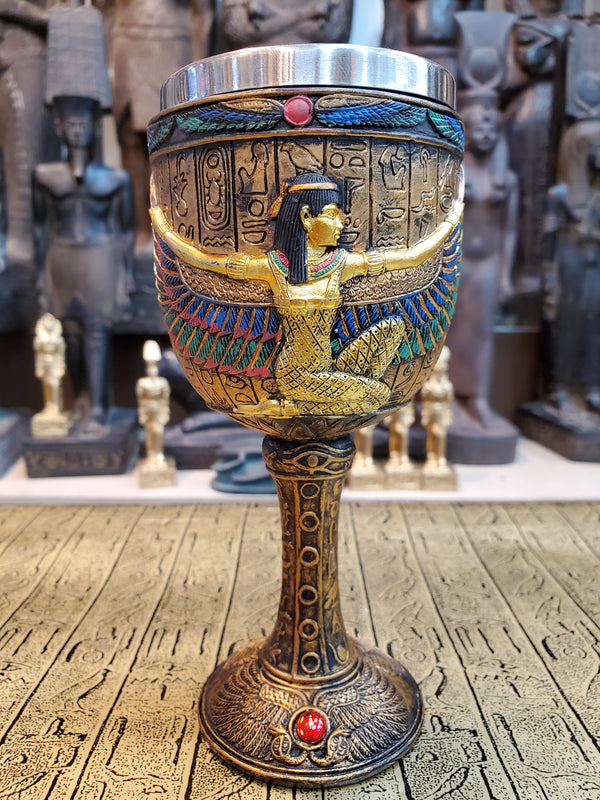
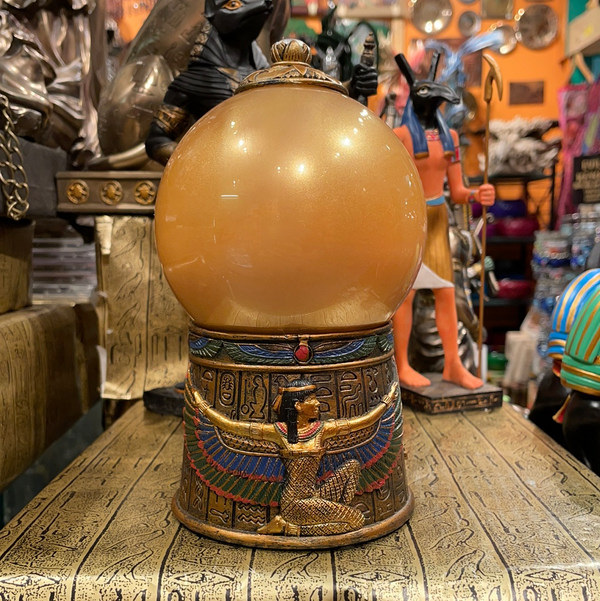
Explore pieces in our shop connected with this subject. The museum objects above are historical references; shop items have their own materials and descriptions.
Explore the Isis collection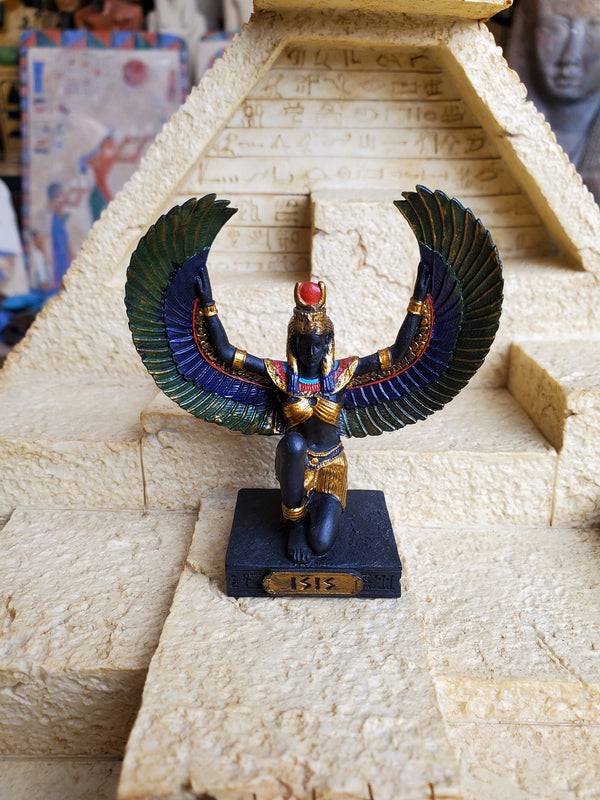
Follow the connections
There’s more to this story.
The evidence behind the entry
Bibliography & image credits
Museum records, language references and published research used for this entry. Name spellings and interpretations are documented here alongside the historical sources.
- Rosicrucian Egyptian Museum — Isis
- The Met — Isis and Horus
- Thesaurus Linguae Aegyptiae — Ꜣst, lemma 271 (accessed 20 October 2026)
- Richard Gordon — “Isis”, Oxford Classical Dictionary (2015)
Photograph: Isis and Horus, The Metropolitan Museum of Art, 45.4.4. Gift of David Dows, 1945. CC0 / Public domain. Resized for display; the complete photograph is preserved.