Entry 10 / Gods & goddesses
Osiris
Life renewed beyond the visible world.
Osiris was the ruler of the dead and a central figure of renewal in Egyptian religion. In his best-known myth, Set kills him and Isis helps restore him. He is usually shown as a wrapped human figure, often holding the crook and flail of kingship.
Take a closer look ↓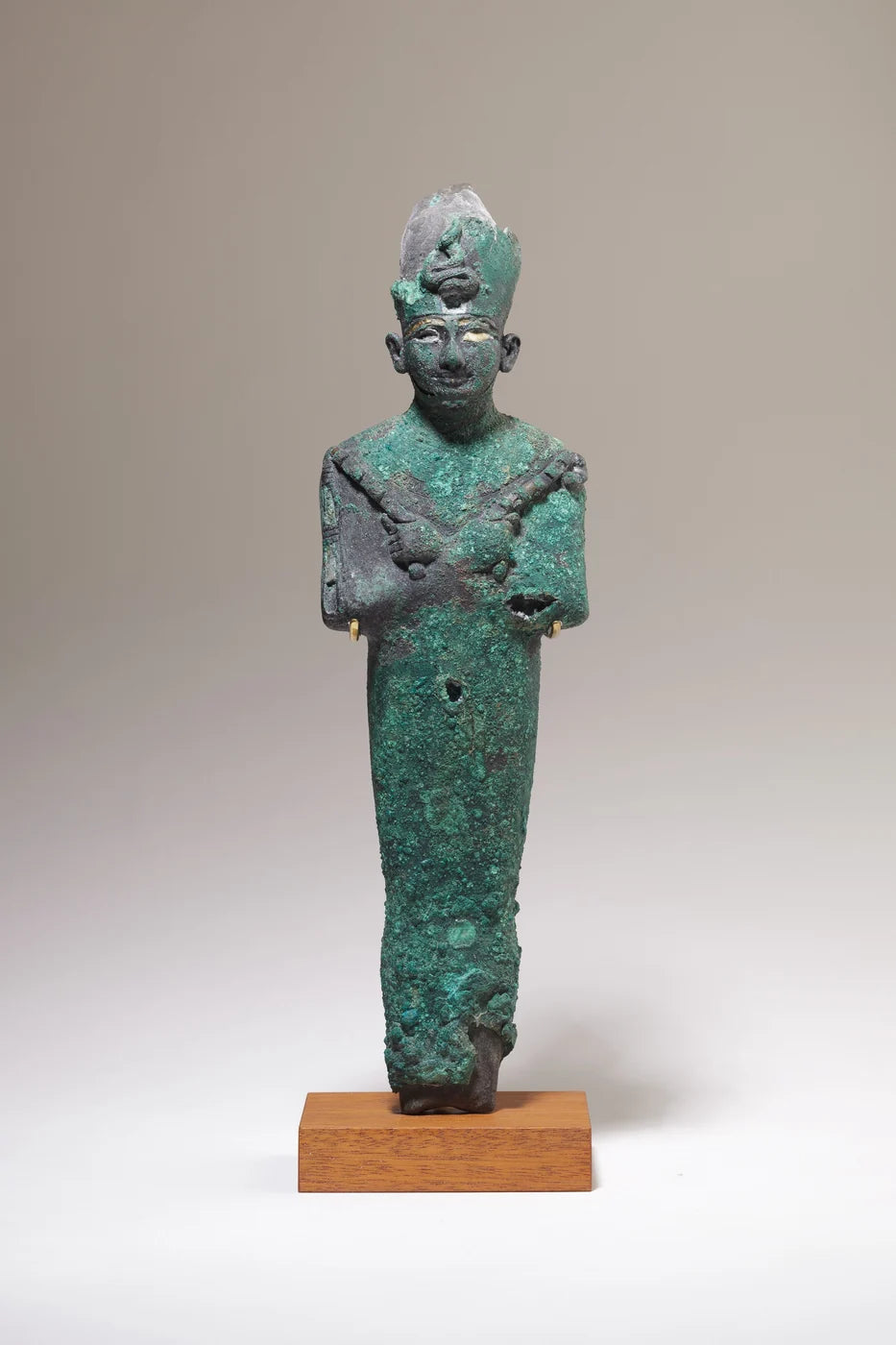
Written in signs
Name & hieroglyphs
- Transliteration
- Wsjr
- Familiar names & readings
- Wesir / Usir / Osiris
One documented spelling, shown in a simple left-to-right line. Ancient spellings and the arrangement of signs varied. Transliteration records consonants; familiar readings supply conventional vowels.
Osiris is the Greek-derived name used in English. The Egyptian name is conventionally transliterated wsjr, though scholars also use other readings. Wesir and Usir are familiar modern renderings, not exact recordings of how every ancient Egyptian pronounced it.
The throne and eye form a well-attested spelling, but their pictures do not prove that the name literally means “seat of the eye.” Its origin and meaning remain debated. Separating a readable spelling from a certain etymology is especially important for this name.
01 / The story
What was Osiris the god of?
Osiris’s death did not end his divine role. In Egyptian traditions he became ruler of the realm of the dead, and his restoration offered a powerful pattern for hopes of continued existence after death. Renewal, rather than death alone, is essential to understanding him.
The story connects him with Isis, who works to restore him, and Horus, who asserts his claim against Set. Accounts vary in their details. The important connection for many funerary images is the possibility that life and order can be restored after destruction.
02 / The story
A king in a wrapped body
Osiris’s wrapped form gives the body a compact silhouette. The hands may emerge to hold a crook and flail, while a crown identifies his royal character. The small figure shown here uses that recognisable combination of posture and attributes.
Do not identify every wrapped figure as Osiris. Shabtis, some forms of other deities and images of the deceased can also be mummiform. Read the hands, headgear and any inscription together. The djed pillar is another useful connection: it became closely associated with Osiris and stability.
Train your eye
Three details to notice.
A close-wrapped body
The legs are often enclosed together, producing a narrow, continuous silhouette.
Crook and flail
These royal emblems are commonly held across the chest.
A distinctive crown
The atef crown combines a tall central element with feathers. Surviving examples may have missing parts.
A little more understanding
Good questions.
Clear answers.
Was Osiris the god of death?
He was ruler of the dead, but describing him only as a death god misses his central associations with restoration and renewed life.
What is the difference between Osiris and Anubis?
Osiris rules the realm of the dead; Anubis is particularly associated with embalming and protection. Their roles complement each other.
Why does Osiris look like a mummy?
The wrapped form expresses his funerary identity and the restoration of his body. It is part of his divine iconography.
What was Osiris’s Egyptian name?
Wsjr is a conventional scholarly transcription, often read Wesir or Usir today. Osiris comes through Greek, and the original Egyptian reading remains a subject of discussion.
Does Osiris mean seat of the eye?
That explanation follows the pictures of the throne and eye signs, but it is not a secure etymology. Scholars have proposed several readings and origins for the name.
Why is Osiris sometimes green?
Green can express renewal and vegetation in Egyptian imagery. His colouring belongs to a religious visual language rather than a naturalistic portrait.
Who are Isis and Horus in Osiris’s story?
In the familiar family tradition, Isis is his wife and Horus their son. Their actions connect his restoration with protection and the continuation of kingship.
What does Osiris usually hold?
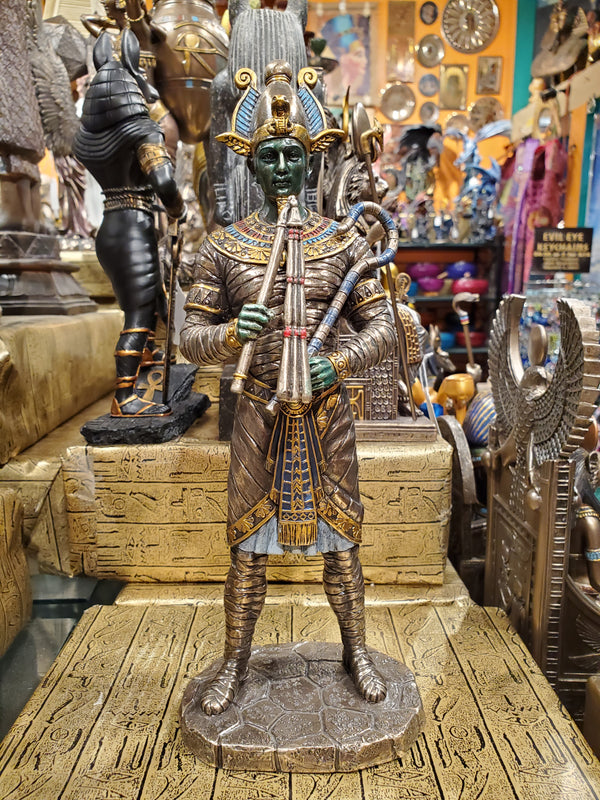
He commonly holds a crook and flail. Together with his wrapped body, beard and crown, they help identify his royal and funerary character.
From the library to your home
Keep the story close.
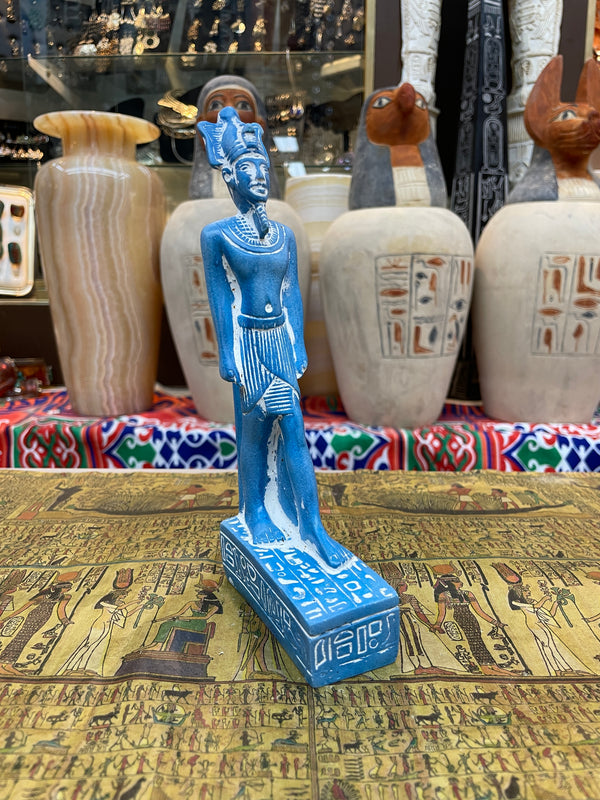
Explore pieces in our shop connected with this subject. The museum objects above are historical references; shop items have their own materials and descriptions.
Explore the Osiris collection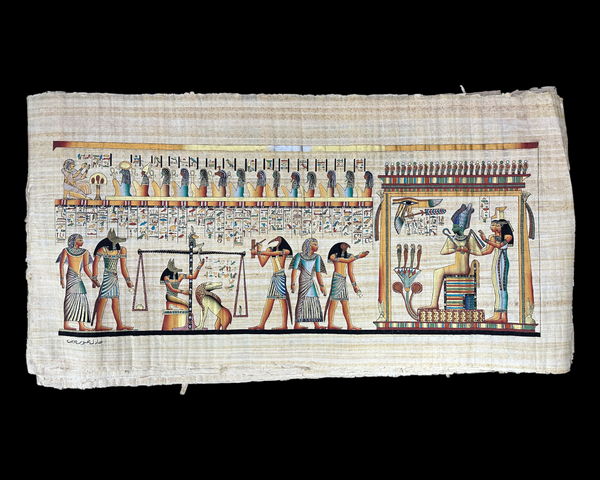
Follow the connections
There’s more to this story.
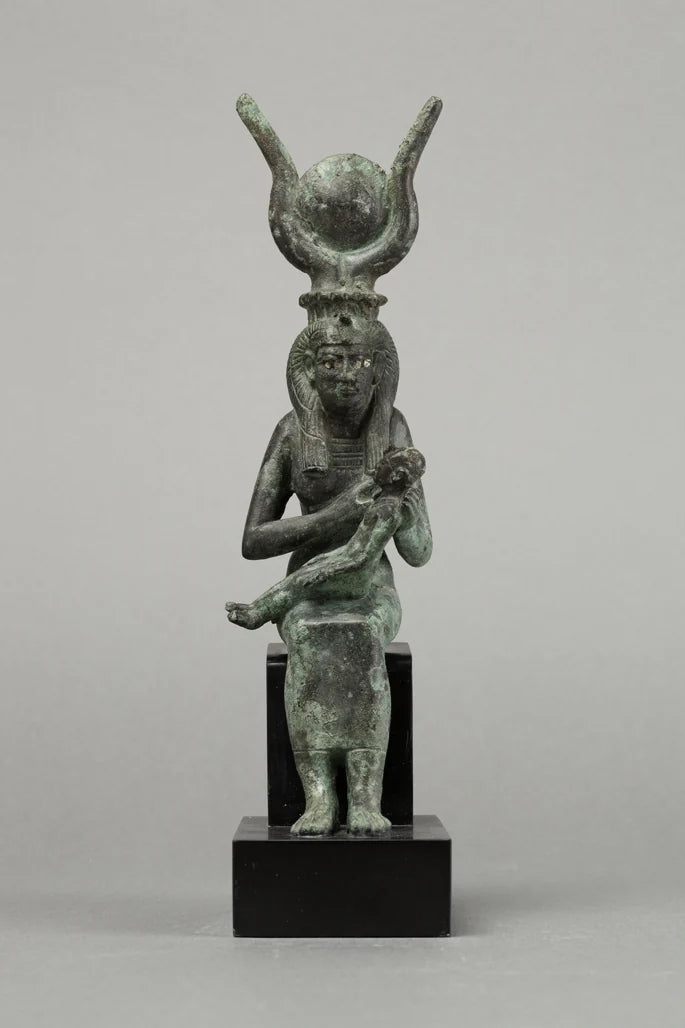
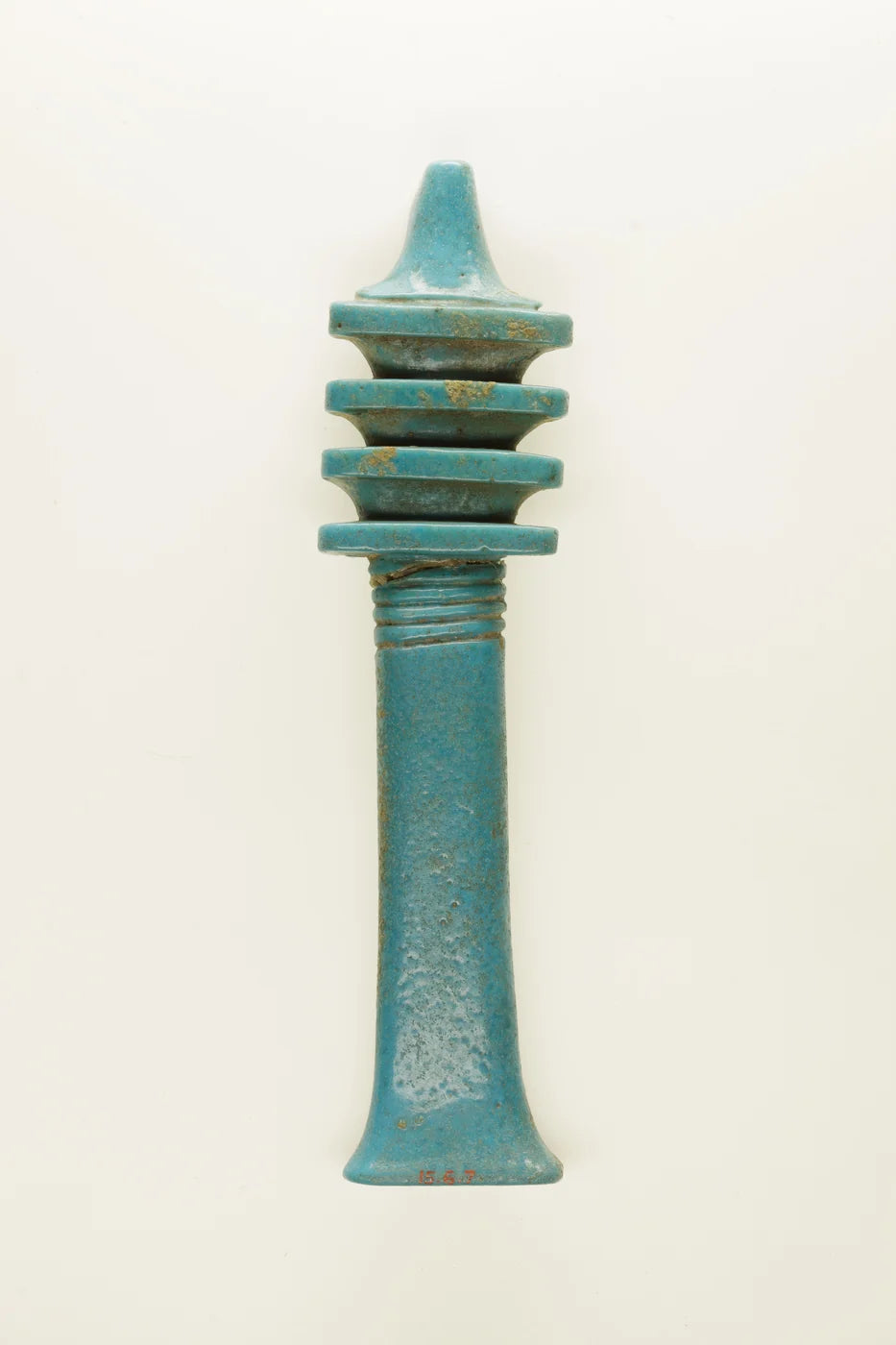
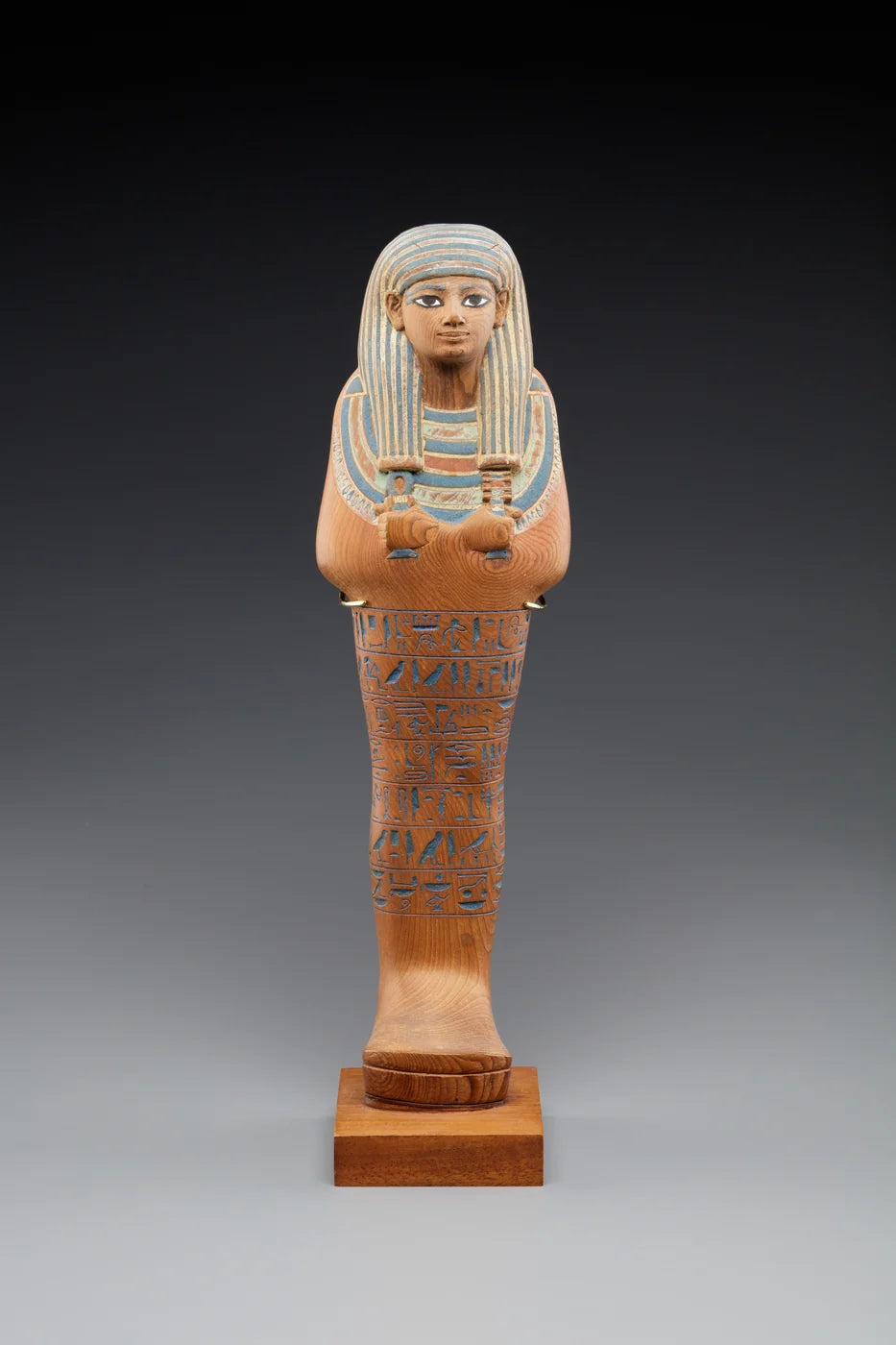
The evidence behind the entry
Bibliography & image credits
Museum records, language references and published research used for this entry. Name spellings and interpretations are documented here alongside the historical sources.
- Rosicrucian Egyptian Museum — Osiris
- The Met — Osiris
- Egyptian Ministry of Tourism and Antiquities — Djed column
- Thesaurus Linguae Aegyptiae — Wsjr, lemma 49460 (accessed 20 October 2026)
- Gábor Takács — “Afrasian Etymology of the Name of Osiris”, Živa Antika 46 (1996), pp. 22–28
Photograph: Osiris, The Metropolitan Museum of Art, 41.6.4. Gift of Elisha Dyer, in memory of George R. Dyer, 1941. CC0 / Public domain. Resized for display; the complete photograph is preserved.