Entry 04 / Gods & goddesses
Horus
The falcon above. The king below.
Horus was a falcon-associated deity closely connected with the sky and Egyptian kingship. In the Osiris tradition, he is the son of Isis and Osiris who contests Set’s claim to rule. The name Horus also belongs to several related divine forms, rather than one unchanging biography.
Take a closer look ↓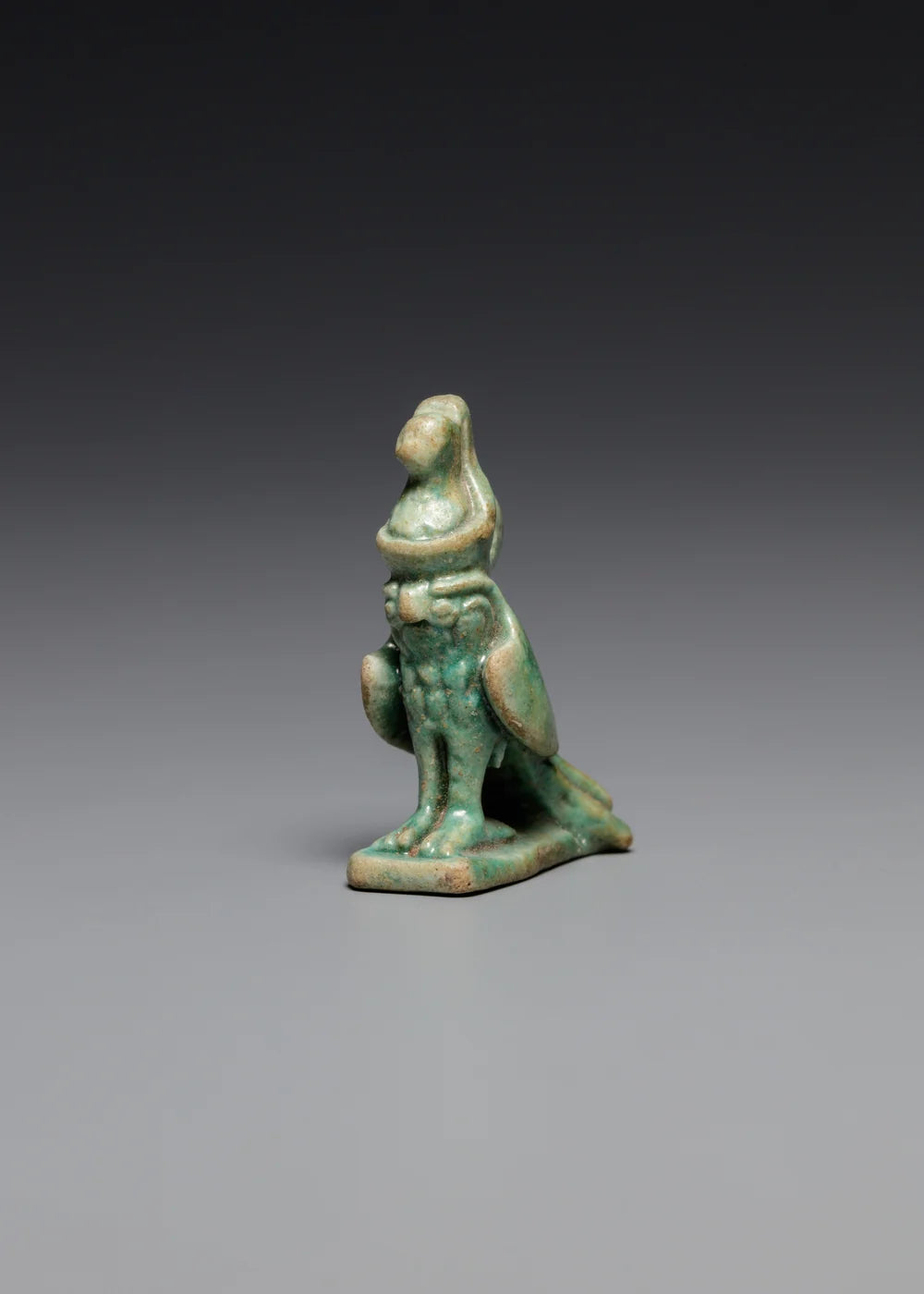
Written in signs
Name & hieroglyphs
- Transliteration
- Ḥrw
- Familiar names & readings
- Hor / Heru / Horus
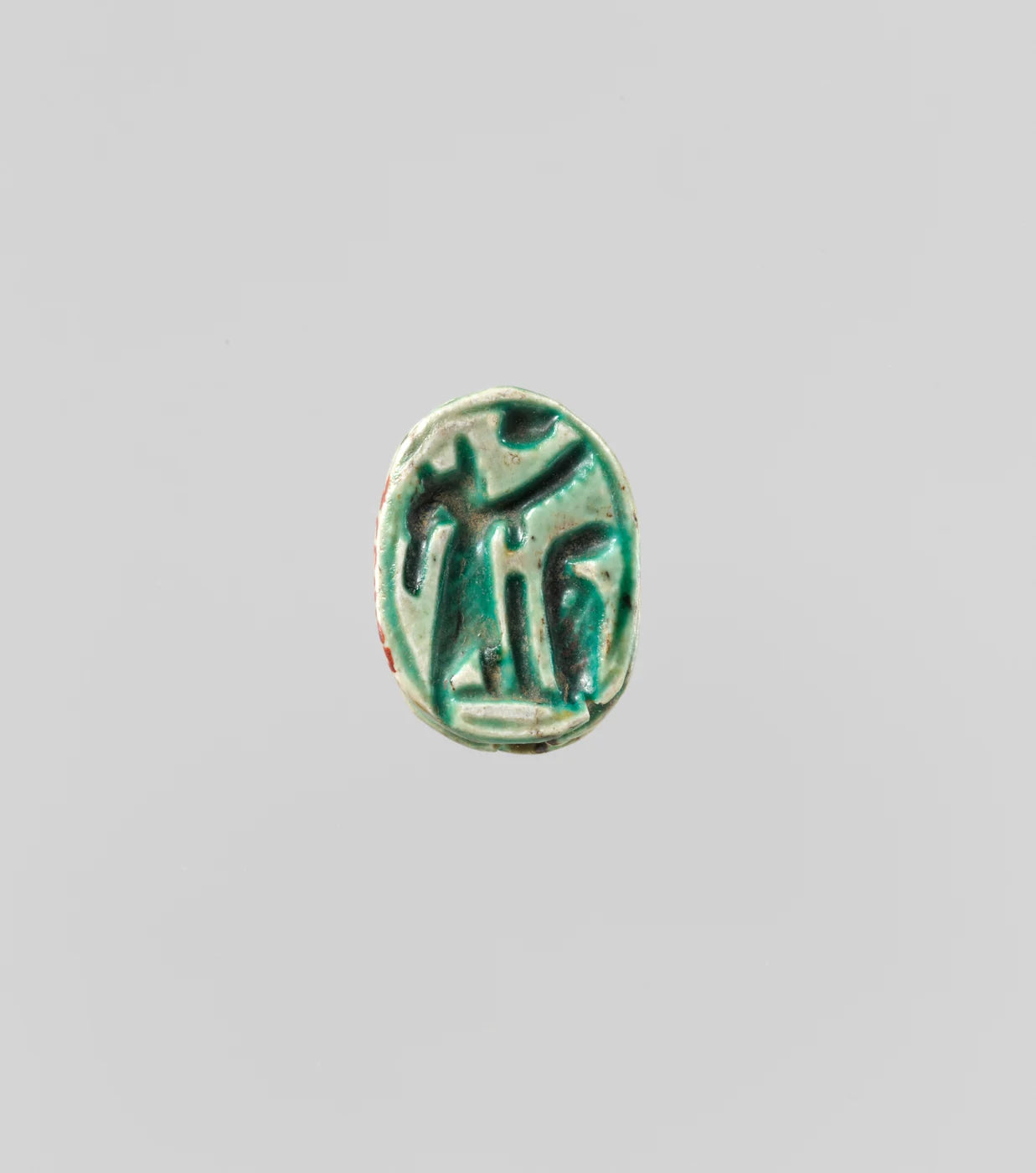
One documented spelling, shown in a simple left-to-right line. Ancient spellings and the arrangement of signs varied. Transliteration records consonants; familiar readings supply conventional vowels.
Horus comes through Greek from the Egyptian name ḥr or ḥrw, often read Hor or Heru in modern Egyptological usage. The falcon sign can stand for the complete divine name; it is not simply a picture placed beside an alphabetic spelling.
The name is commonly interpreted as “the distant one,” a fitting description for a sky deity imagined as a soaring falcon. Longer names identify particular forms of Horus. They should be read as meaningful combinations rather than treated as unrelated gods merely sharing a bird’s head.
01 / The story
Who was Horus?
A falcon can move high above the landscape and survey it from the sky. In Egyptian religious art, the bird became a powerful image of Horus and royal protection. The living king was closely associated with the god, making a falcon more than a decorative animal in royal imagery.
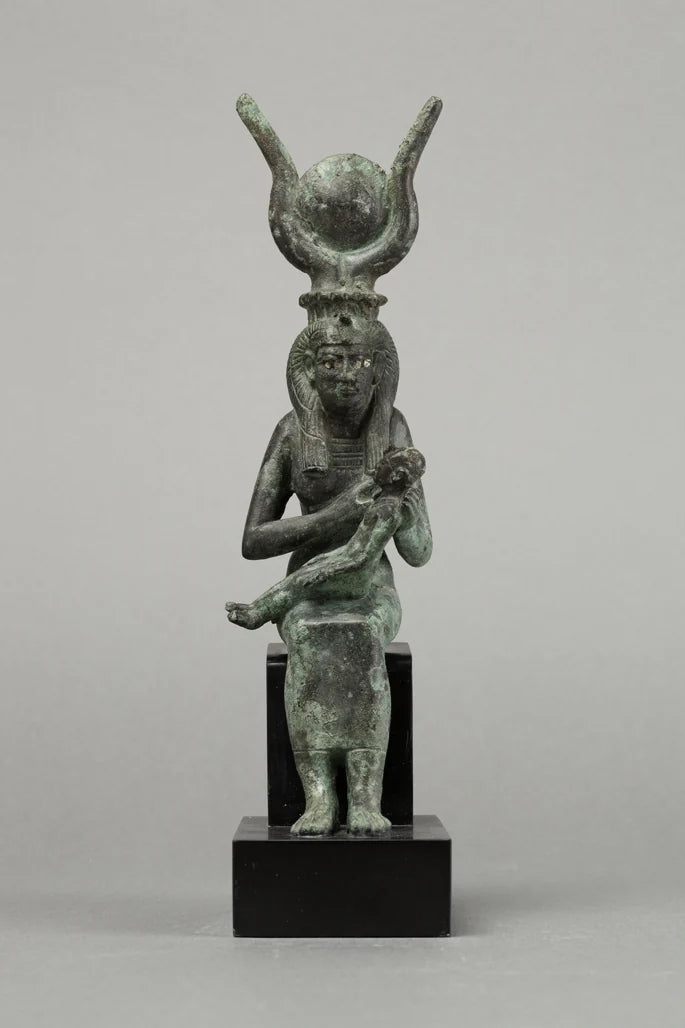
In the story of Isis and Osiris, Horus grows up under his mother’s protection and challenges Set over kingship. Other traditions speak of different forms of Horus. These overlapping traditions should not be forced into a single modern family tree.
02 / The story
From falcon to sacred eye
Horus may appear as a complete falcon, a falcon-headed adult, or a child. Headdresses and inscriptions help identify the particular form. A falcon head by itself is not conclusive: other deities, including Ra-Horakhty and Khonsu, can share it.
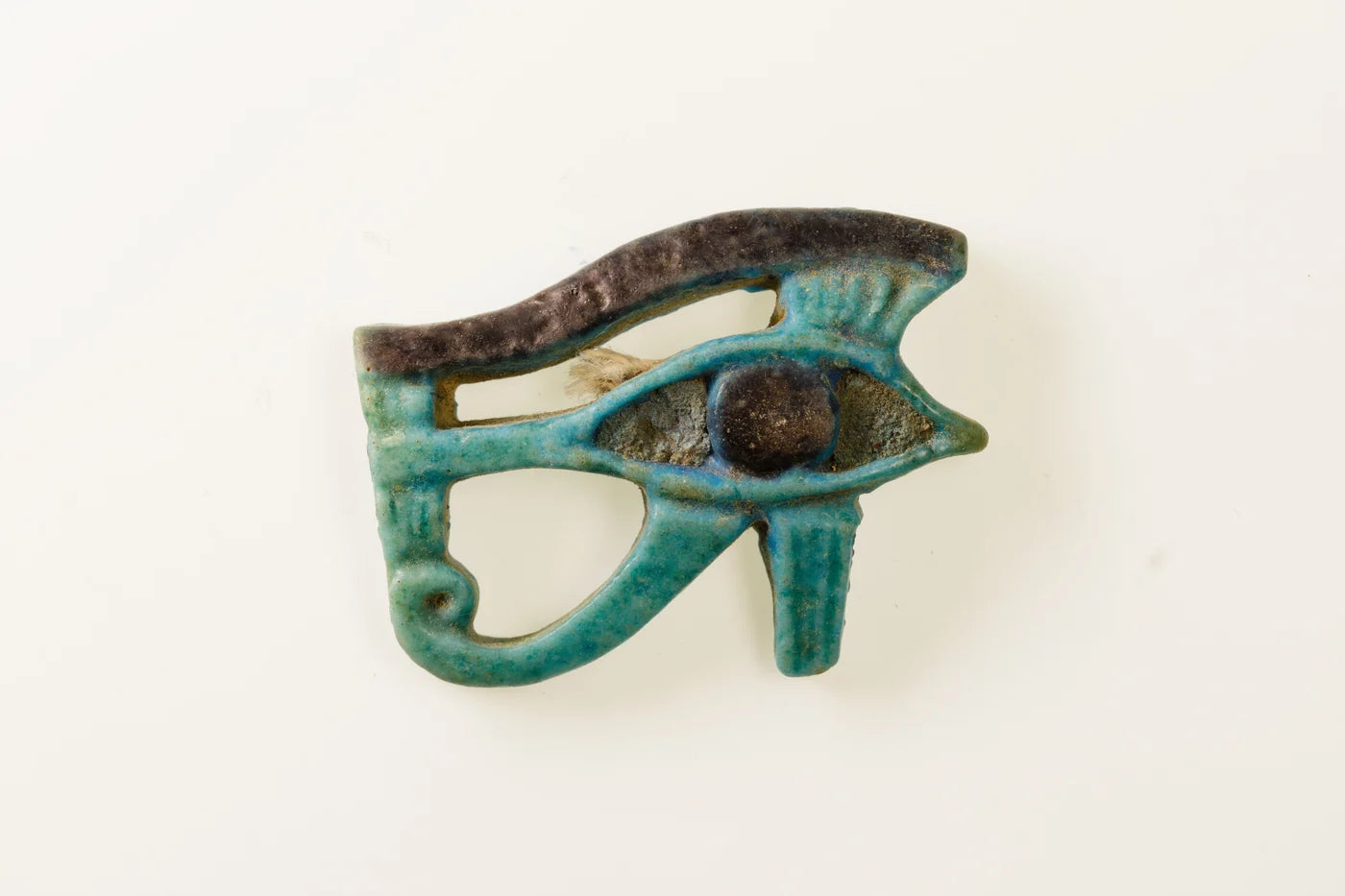
The wedjat, or Eye of Horus, refers to an eye restored after injury in the conflict with Set. As an amulet, that recovered wholeness could express healing, protection and renewal. It is a related symbol with its own history, rather than a miniature portrait of the whole god.
Train your eye
Three details to notice.
Falcon features
Look for a short hooked beak, pronounced eye markings and a bird of prey’s compact head.
A royal crown
A double crown can connect a falcon image with kingship. Other crowns indicate other forms or contexts.
A child’s gesture
The child Horus may hold a finger to his mouth; this is an Egyptian marker of childhood.
A little more understanding
Good questions.
Clear answers.
Is Horus the same as Ra?
No. They are distinct deities, though they could be combined as Ra-Horakhty. Shared falcon imagery does not make every falcon-headed figure the same god.
Who are Horus’s parents?
In the Osiris tradition, Isis and Osiris are his parents. Other forms of Horus belong to different theological traditions.
What does the Eye of Horus mean?
The restored eye became a protective sign associated with healing and wholeness. Its meaning comes from the story of injury and restoration.
What does the name Horus mean?
The Egyptian name ḥr or ḥrw is commonly interpreted as “the distant one.” Horus is the familiar Greek-derived form; Hor and Heru are modern conventional readings.
How do you recognise Horus’s name in hieroglyphs?
A falcon can write the entire name. Longer names and titles add signs identifying a particular form of Horus or explaining his role.
Why was Horus linked with the pharaoh?
Horus represented divine kingship and the protection of royal authority. The king’s identification with him was central to Egyptian royal imagery.
Does Horus always have a falcon head?
No. He can appear as a complete falcon, a falcon-headed man or a child. The surrounding scene and inscription help distinguish these forms.
Is every falcon-headed god Horus?
No. Several gods use falcon imagery, including solar forms such as Ra-Horakhty. A head shape is a clue, but crowns, names and context matter too.
From the library to your home
Keep the story close.
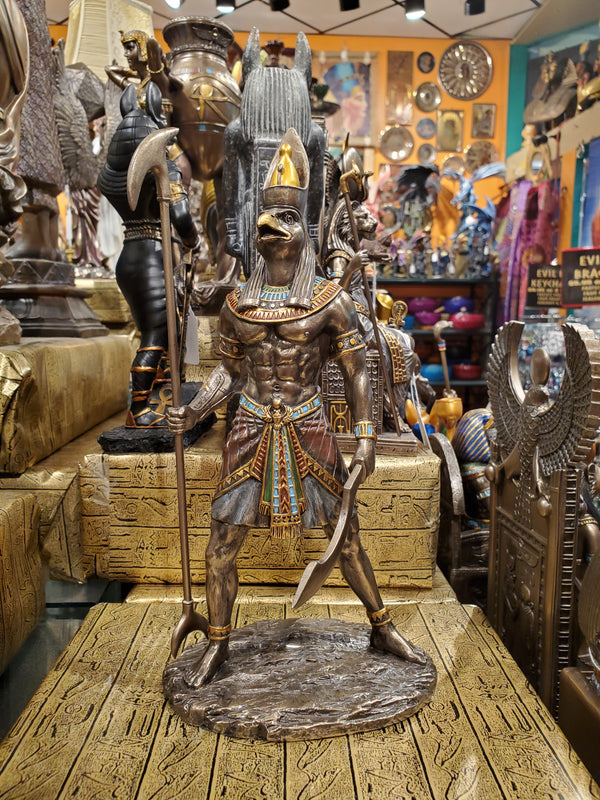
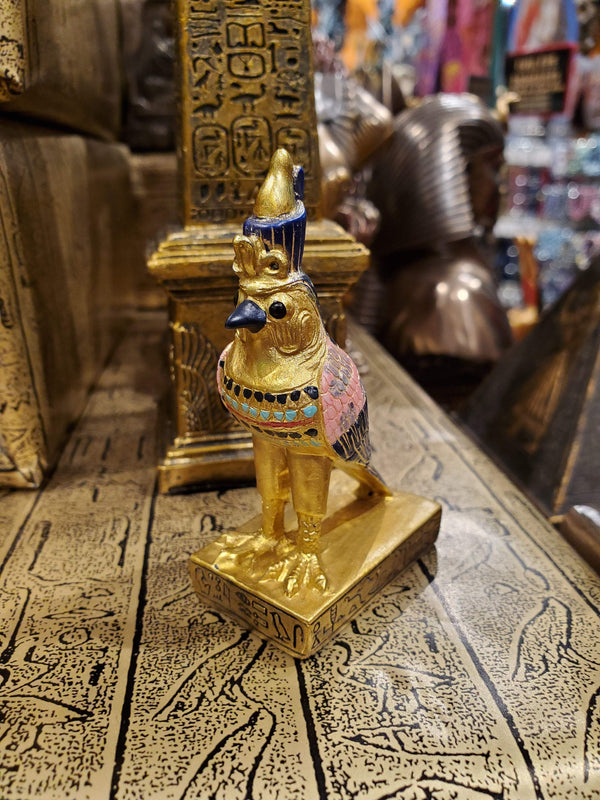
Explore pieces in our shop connected with this subject. The museum objects above are historical references; shop items have their own materials and descriptions.
Explore the Horus collection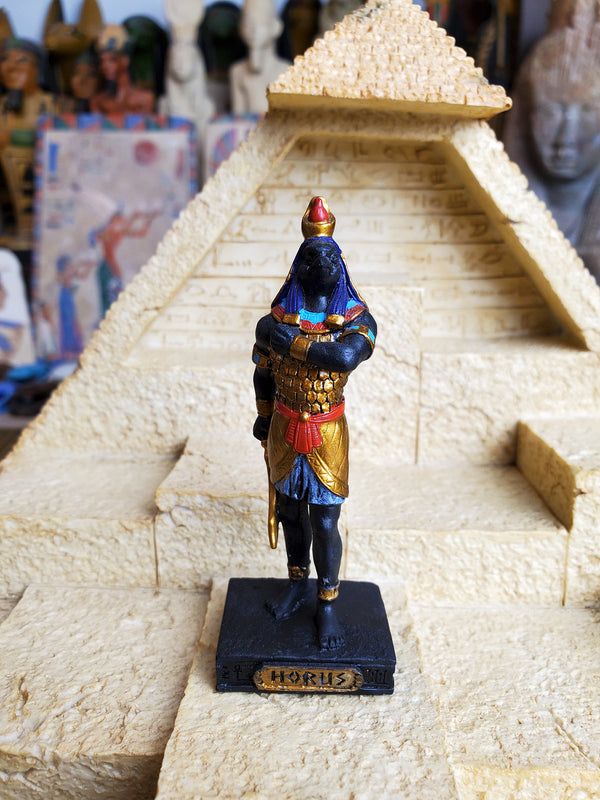
Follow the connections
There’s more to this story.
The evidence behind the entry
Bibliography & image credits
Museum records, language references and published research used for this entry. Name spellings and interpretations are documented here alongside the historical sources.
- Rosicrucian Egyptian Museum — Horus
- The Met — Horus falcon
- The Met — Wedjat eye amulet
- Thesaurus Linguae Aegyptiae — Ḥrw, lemma 107500 (accessed 20 October 2026)
- North Carolina Museum of Art — Horus Falcon, GL.57.14.86
Photograph: Horus falcon, The Metropolitan Museum of Art, 22.1.1325. Rogers Fund and Edward S. Harkness Gift, 1922. CC0 / Public domain. Resized for display; the complete photograph is preserved.