Entry 16 / Symbols & amulets
Eye of Horus
An eye restored. A wish for wholeness.
The Eye of Horus, usually called the wedjat, represents the god’s eye restored after injury. It became a widely used protective amulet associated with healing, soundness and renewal. Its distinctive outline combines an eye and brow with markings inspired by a falcon.
Take a closer look ↓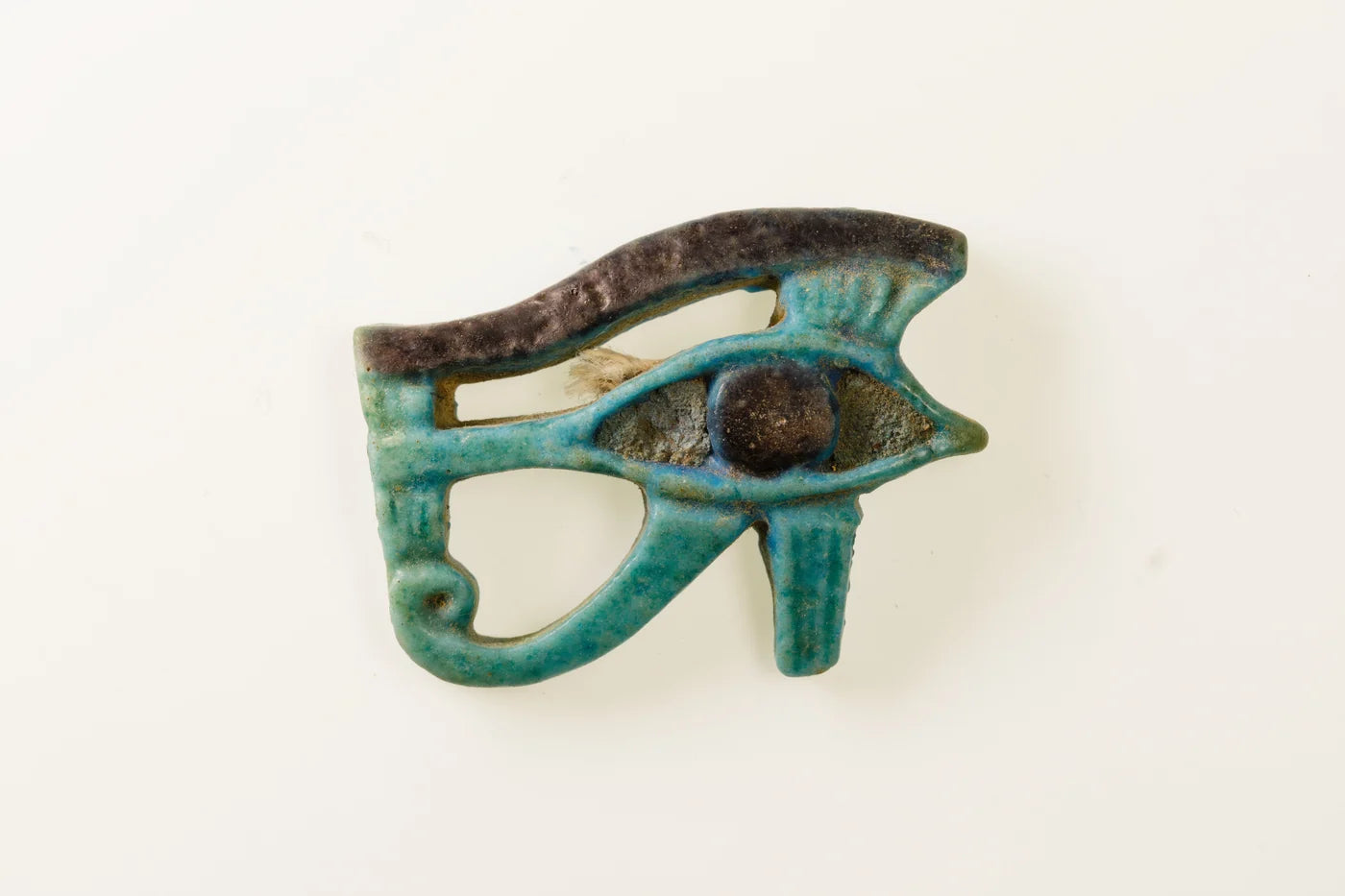
Written in signs
Name & hieroglyphs
- Transliteration
- Wḏꜣt
- Familiar names & readings
- Wedjat / Udjat / Oudjat
One documented spelling, shown in a simple left-to-right line. Ancient spellings and the arrangement of signs varied. Transliteration records consonants; familiar readings supply conventional vowels.
The protective eye is called wḏꜣt, conventionally read wedjat. It belongs with wḏꜣ, “sound” or “intact,” with the feminine t ending: the “intact one.” This name makes the eye’s restoration and wholeness central to its meaning.
“Eye of Horus” is a descriptive English name; the Egyptian phrase jrt Ḥr means “eye of Horus.” Wedjat, udjat and oudjat are different modern renderings of the same Egyptian term. The hieroglyphic spelling shown combines sound signs with the recognisable marked eye.
01 / The story
What does the Eye of Horus mean?
The symbol’s force comes from restoration. In the conflict between Horus and Set, Horus’s eye is injured and then made whole. An image of that recovered eye could express a wish for the owner’s own protection and well-being.
Wedjat amulets occur in many materials and arrangements. Some are solid, some are openwork, and some include additional figures. The meaning of wholeness can remain recognisable even when an artist changes the surrounding design.
02 / The story
Learning to read the outline
Start with the upper eyebrow and the human-like eye beneath it. The descending and curling marks below connect the design with the falcon’s facial markings. The whole form is stylised: it is a symbolic image rather than an anatomical diagram.
The Eye of Ra belongs to a related but different religious idea: the sun god’s active power, often personified by a goddess. A neat modern rule based only on which way an eye faces cannot replace the object’s inscription and context. Read the story as well as the outline.
Train your eye
Three details to notice.
Eye and eyebrow
An elongated eye beneath a strong brow forms the core of the design.
Marks beneath the eye
The hanging line and curled extension evoke the facial markings of a falcon.
Added figures
Some amulets incorporate other images. These details can add meaning without changing the central eye form.
A little more understanding
Good questions.
Clear answers.
Are the Eye of Horus and the Eye of Ra identical?
They are connected ideas, but their stories differ. The wedjat emphasises Horus’s restored eye; the Eye of Ra expresses the sun god’s power and can act as a goddess.
Does the Eye of Horus symbolise protection?
Yes. Protection, healing and restored wholeness are central to the ancient amulet’s meaning.
Is a modern eye pendant an ancient amulet?
It may draw on ancient imagery, but a newly made pendant is a contemporary object. Its materials, maker and date should be described on their own terms.
What does wedjat mean?
It means the “intact one,” from a word connected with being sound or whole. The name points to the eye’s restoration and completeness.
Are wedjat, udjat and oudjat different symbols?
They are different modern spellings of the same Egyptian term. Differences in transliteration often produce several familiar names for one object or idea.
Why does the eye have markings underneath it?
The design combines an eye with characteristic falcon-related markings. These features help distinguish the wedjat from a simple naturalistic drawing of a human eye.
Why is the Eye of Horus associated with healing?
Its restoration after injury in Egyptian myth made it a powerful image of wholeness. The protective meaning follows that religious story.
Were wedjat eyes made in different materials?
Yes. Surviving examples use several materials, including faience. An object’s material, colour and archaeological setting help explain its particular use.
From the library to your home
Keep the story close.
Explore pieces in our shop connected with this subject. The museum objects above are historical references; shop items have their own materials and descriptions.
Explore Egyptian-inspired jewelleryFollow the connections
There’s more to this story.


The evidence behind the entry
Bibliography & image credits
Museum records, language references and published research used for this entry. Name spellings and interpretations are documented here alongside the historical sources.
- The Met — Wedjat eye amulet and its meaning
- The Met — Assyria to Iberia, discussion of Eye of Re goddesses
- Thesaurus Linguae Aegyptiae — Wḏꜣt, lemma 52140 (accessed 20 October 2026)
- Thesaurus Linguae Aegyptiae — jrt Ḥrw, eye of Horus, lemma 28410 (accessed 20 October 2026)
Photograph: Wedjat Amulet, The Metropolitan Museum of Art, 28.3.147. Rogers Fund, 1928. CC0 / Public domain. Resized for display; the complete photograph is preserved.