Entry 01 / Gods & goddesses
Bastet
A protective presence. A familiar feline face.
Bastet was an Egyptian goddess associated with protection, fertility and the pleasures of music and celebration. Best known today through images of cats, she could also appear as a cat-headed woman or a lioness. Her principal cult centre was Bubastis in the Nile Delta.
Take a closer look ↓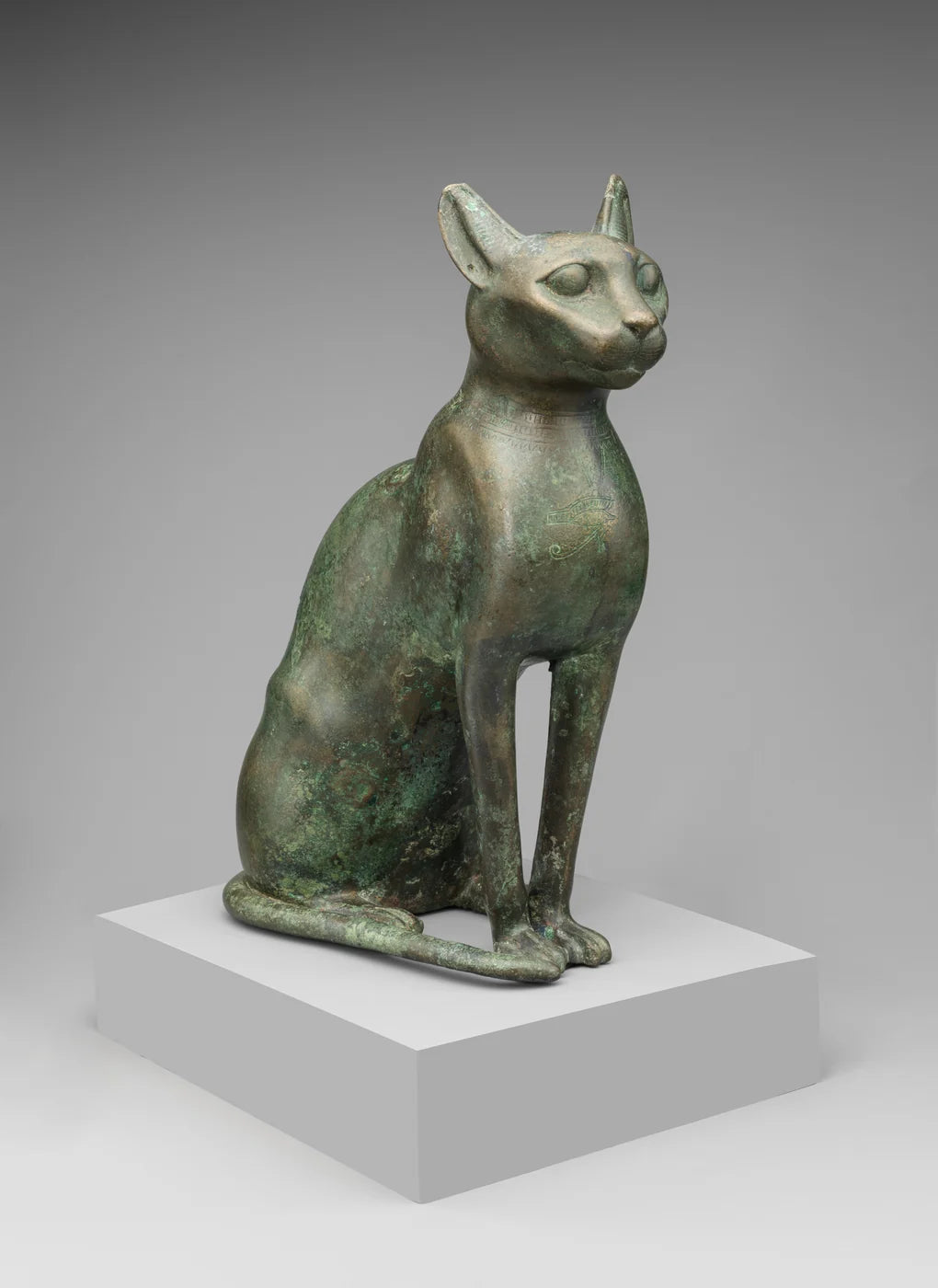
Written in signs
Name & hieroglyphs
- Transliteration
- Bꜣstjt
- Familiar names & readings
- Bast / Bastet
One documented spelling, shown in a simple left-to-right line. Ancient spellings and the arrangement of signs varied. Transliteration records consonants; familiar readings supply conventional vowels.
Bastet’s name is written Bꜣstjt in the dictionary convention used here; bꜣstt is another familiar transcription. The opening vessel sign has the sound value bꜣs, followed by bread-loaf signs for t. A picture in a name can represent sounds rather than a literal object.
The name’s original derivation is debated. Proposed connections include the place-name Bast and the vessel sign used to write it, but no single English translation should be treated as certain. Bast and Bastet are familiar forms of the same goddess’s name.
01 / The story
Who was Bastet?
A seated cat is one of ancient Egypt’s most recognisable images. In a religious setting, that alert, composed animal could evoke Bastet. Yet the goddess was more complex than a patron of household pets. Her protective power also had a formidable side, expressed through lioness imagery.
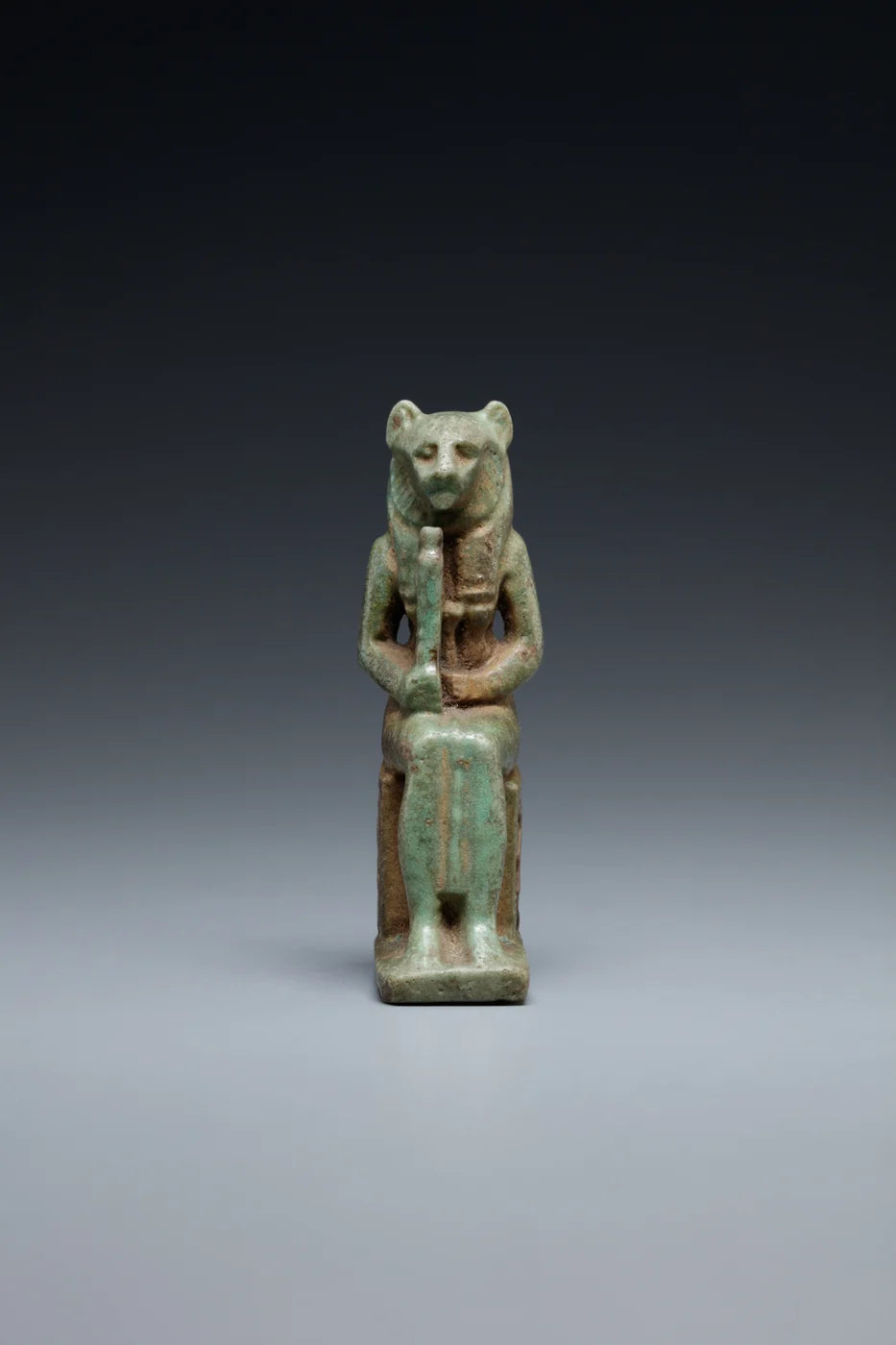
The cat-headed statuettes often give her a human body and several attributes: a sistrum, a protective aegis and a basket. A sistrum is a rattle used in religious music. Together, these details bring protection and celebration into the same image.
02 / The story
Cats, offerings and Bubastis
Bastet’s sanctuary at Bubastis was a major centre of her worship. Cat statuettes and mummified cats belonged to a wider culture of offerings dedicated to deities. Their presence in temples and cemeteries helps explain why so many feline images survive.
The bronze cat shown here was intended to contain a mummified cat. That original function matters: what looks like a freestanding sculpture today was also a religious container. Ancient objects can carry practical and sacred roles at once.
Train your eye
Three details to notice.
The feline head
Pointed ears and a cat’s muzzle are useful clues; some earlier or fiercer forms have a lioness head.
The musical rattle
A sistrum can connect a cat-headed figure with music and ritual. Check the other attributes too.
The seated cat
A compact, upright cat may represent Bastet or be an offering associated with her cult.
A little more understanding
Good questions.
Clear answers.
Are Bast and Bastet the same goddess?
Yes. Bast and Bastet are names used for the same goddess. Different spellings reflect the ways Egyptian names have been written and rendered in other languages.
Are Bastet and Sekhmet the same?
They are distinct goddesses with overlapping feline and protective associations. Egyptian traditions could connect their gentler and fiercer aspects, but treating them as interchangeable loses important context.
Were these cat figures ordinary decorations?
Many surviving examples were religious offerings or containers. Their original setting and inscriptions tell us more than their appearance alone.
What does the name Bastet mean?
Its original meaning is debated. The vessel sign supplies sounds in her name; interpreting the name simply as “cat goddess” or “goddess of perfume” goes beyond a secure translation.
How was Bastet’s name written in hieroglyphs?
One dictionary spelling uses the bꜣs vessel sign followed by two t signs. Ancient spellings varied, and some add a goddess or animal classifier.
Was Bastet always shown as a domestic cat?
No. Her imagery also includes a lioness and a woman with a feline head. Forms and associations developed over Egypt’s long history.
What is the instrument Bastet sometimes holds?
It is a sistrum, a ritual rattle. It connects her imagery with music and ceremonial activity, alongside her protective character.
What is the difference between a cat figure and a Bastet figure?
A cat figure may evoke Bastet, but an inscription, pose, accessories and archaeological context help establish its specific purpose. The animal shape alone does not explain everything.
From the library to your home
Keep the story close.
Explore pieces in our shop connected with this subject. The museum objects above are historical references; shop items have their own materials and descriptions.
Explore the Bastet collection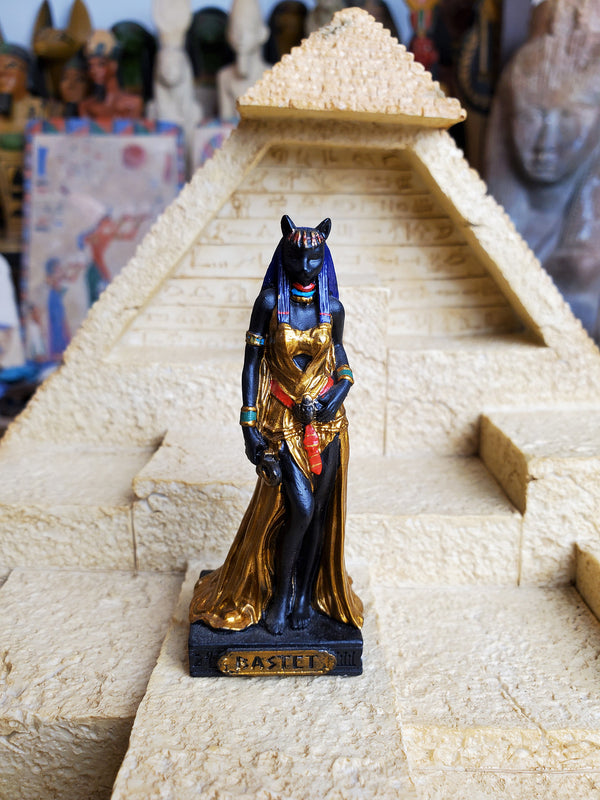
Follow the connections
There’s more to this story.

The evidence behind the entry
Bibliography & image credits
Museum records, language references and published research used for this entry. Name spellings and interpretations are documented here alongside the historical sources.
- The Met — Bastet holding sistrum, 45.4.5
- The Met — Cat statuette intended to contain a mummified cat
- Rosicrucian Egyptian Museum — Bastet
- Thesaurus Linguae Aegyptiae — Bꜣstjt, lemma 53640 (accessed 20 October 2026)
- Maria Diletta Pubblico & Stefano Vittori — “Where do you come from, Bastet?”, Current Research in Egyptology 2019, abstract p. 56
Photograph: Cat Statuette intended to contain a mummified cat, The Metropolitan Museum of Art, 56.16.1. Harris Brisbane Dick Fund, 1956. CC0 / Public domain. Resized for display; the complete photograph is preserved.