Entry 13 / Gods & goddesses
Khonsu
The traveller crossing the night sky.
Khonsu was an Egyptian moon god whose name is commonly translated as ‘the traveller’. At Thebes he formed a divine family with Amun and Mut. He could appear as a youthful figure or a falcon-headed man, often wearing a lunar disk above a crescent.
Take a closer look ↓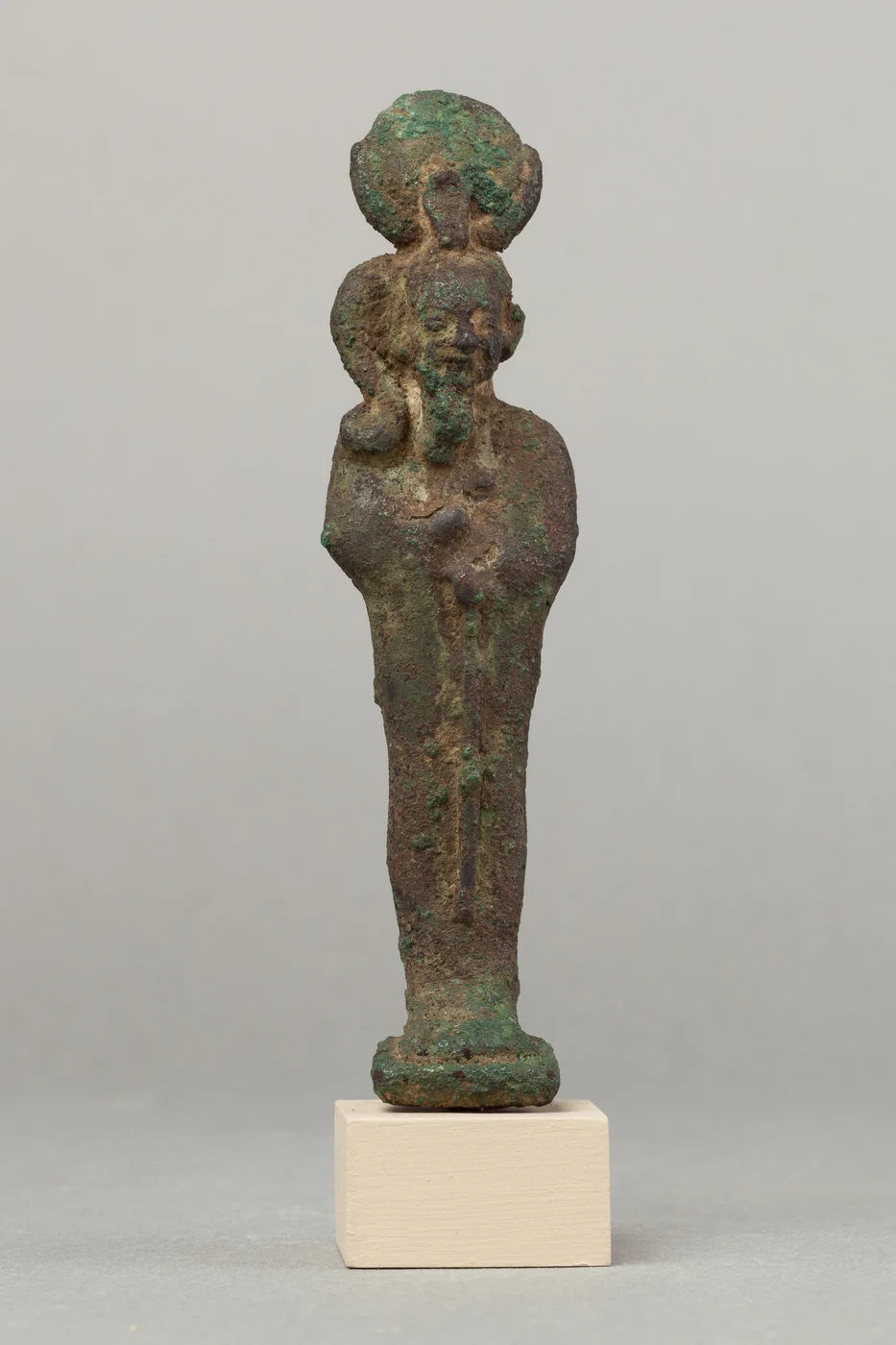
Written in signs
Name & hieroglyphs
- Transliteration
- Ḫnsw
- Familiar names & readings
- Khonsu / Khons / Khonsou
One documented spelling, shown in a simple left-to-right line. Ancient spellings and the arrangement of signs varied. Transliteration records consonants; familiar readings supply conventional vowels.
Khonsu’s name is transliterated ḫnsw and is usually understood as “the traveller,” connected with the idea of crossing or travelling. It suits his lunar identity and the moon’s movement across the sky.
The signs shown write the consonants of that name. Khons, Khonsu and Khonsou are modern renderings with different vowel conventions. The name itself does not simply mean “moon”: an Egyptian word for the moon is jꜥḥ, also used as the name of the separate deity Iah.
01 / The story
Who was Khonsu?
The moon’s movement gives a natural setting to Khonsu’s name. Its changing appearance marks time and renewal across the night sky. His worship was closely connected with Thebes, where a temple dedicated to him forms part of the Karnak complex.
Khonsu also acquired a reputation for healing and protection. These were ancient religious beliefs about divine power, not medical claims about modern objects. His connections with the moon overlap with those of Thoth, while the two gods retain distinct identities.
02 / The story
More than one appearance
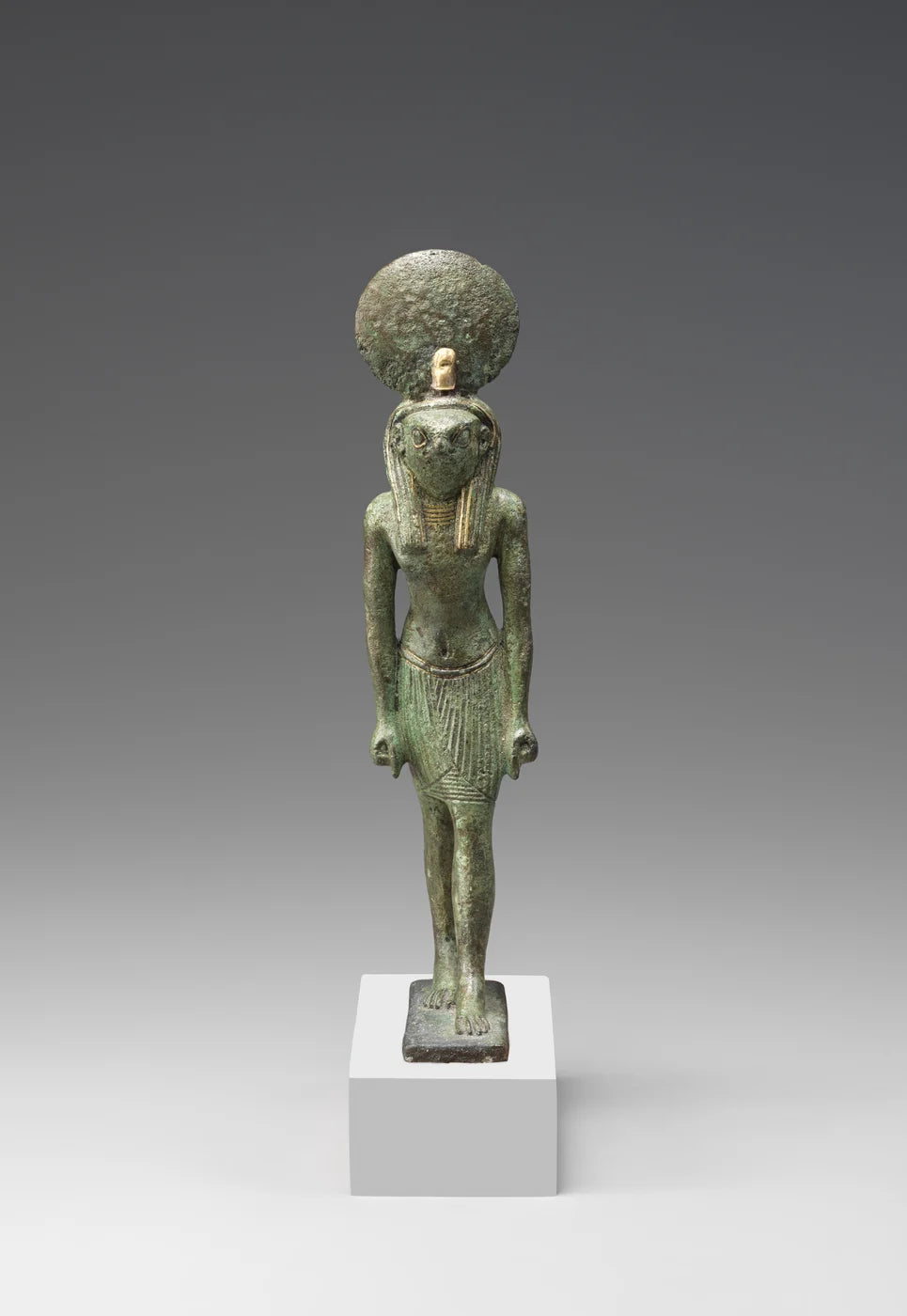
The Met’s statuette shown here presents Khonsu as a child deity. A sidelock of hair, a close-fitting wrapped garment and the moon disk distinguish this form. The child is also a divine figure: his youthful appearance belongs to a family of gods, rather than a portrait of an ordinary child.
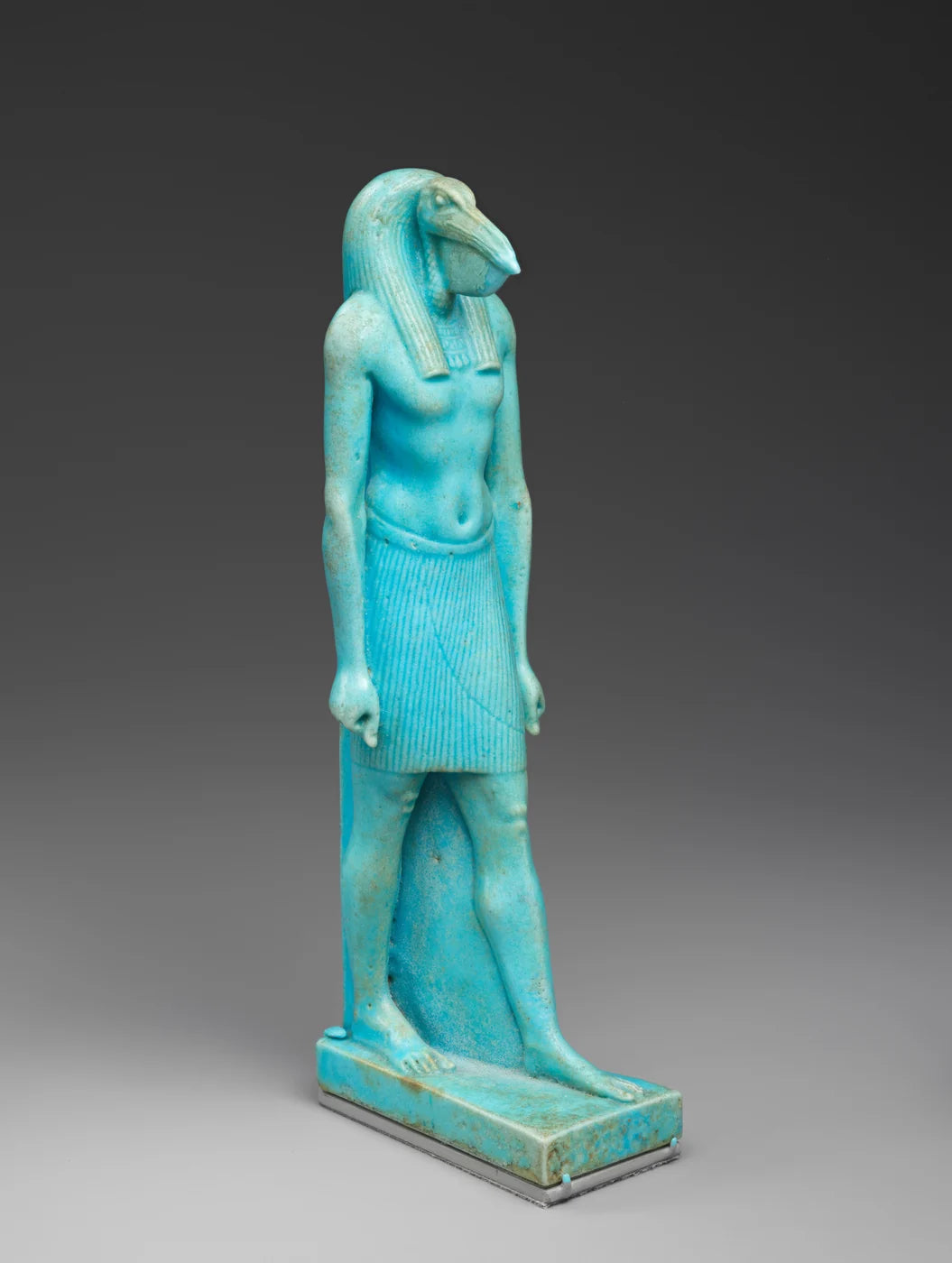
Another form appears in the Walters Art Museum: a falcon-headed man with the lunar disk and crescent. These two examples show why Egyptian deities cannot always be recognised by a face alone. Crown, clothing, inscription and setting all help establish an identity.
Train your eye
Three details to notice.
Disk above a crescent
A rounded lunar disk resting within a crescent is a strong clue to Khonsu’s lunar identity.
Youthful attributes
Some forms use a sidelock of hair or other signs of childhood.
A falcon-headed alternative
The falcon-headed form shows why an animal head alone is not enough to identify a god.
A little more understanding
Good questions.
Clear answers.
Is Khonsu the same as Thoth?
No. Both have lunar associations, but Khonsu and Thoth have different divine relationships and visual forms.
Does Khonsu always look like a child?
No. He can appear as a youthful figure or a falcon-headed man, among other forms. The Met statuette illustrated here shows the child form; the Walters collection preserves a falcon-headed example.
Is Khonshu from modern fiction based on an ancient god?
The name draws on Khonsu. A fictional adaptation should be distinguished from the ancient evidence, which describes a lunar deity with a long and varied history.
What does Khonsu’s name mean?
It is usually understood as “the traveller,” connected with travelling or crossing. The interpretation fits the moon’s movement across the sky.
Does Khonsu mean moon in Egyptian?
No. It is a divine name associated with travelling. Jꜥḥ is an Egyptian word for the moon and is also used as the name of the deity Iah.
Who are Khonsu’s parents?
In the Theban triad he is the son of Amun and Mut. Local and historical context matters when discussing Egyptian divine families.
What is the hairstyle shown on child forms of Khonsu?
It is the sidelock of youth, a visual marker of childhood in Egyptian art. It identifies a divine child, not an ordinary modern hairstyle.
What do the disk and crescent on Khonsu’s head mean?
They refer to the moon. This lunar headdress is an important clue, particularly when he appears in a form that shares features with other deities.
From the library to your home
Keep the story close.
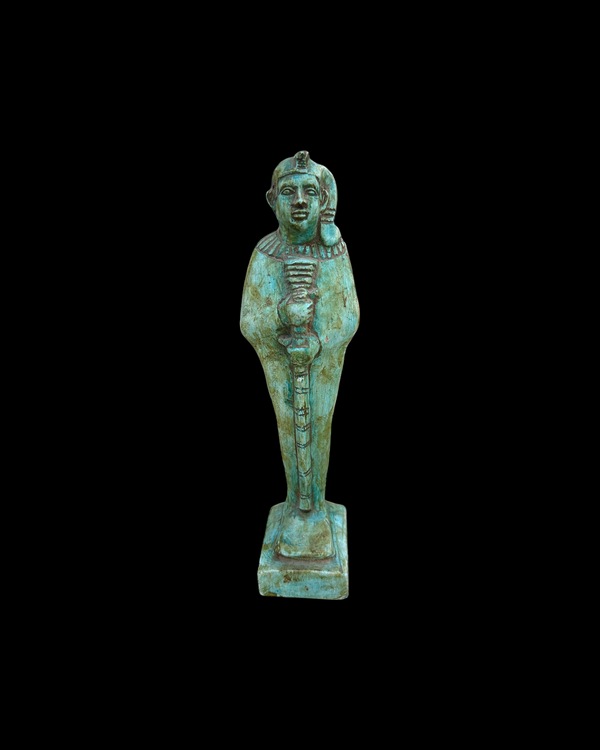
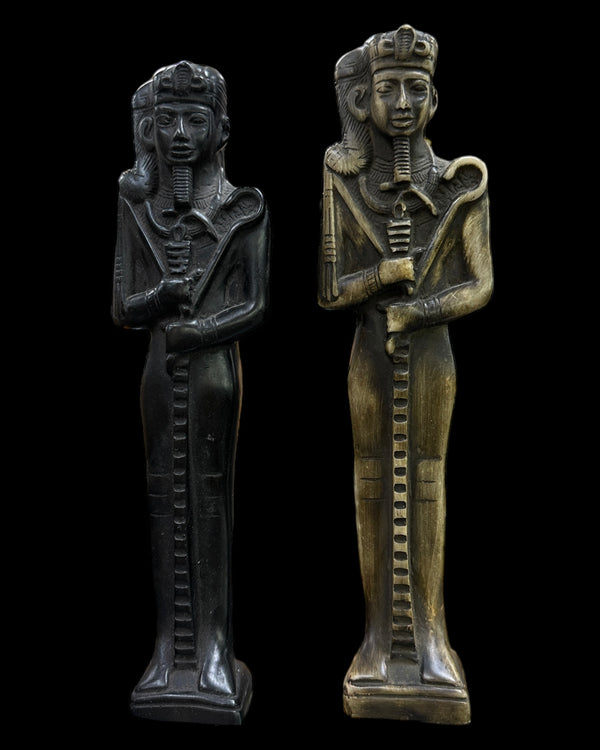
Explore pieces in our shop connected with this subject. The museum objects above are historical references; shop items have their own materials and descriptions.
Explore the Khonsu collection
Follow the connections
There’s more to this story.

The evidence behind the entry
Bibliography & image credits
Museum records, language references and published research used for this entry. Name spellings and interpretations are documented here alongside the historical sources.
- LACMA — Khonsu
- The Walters Art Museum — Statue of a standing Khonsu, 54.395
- The Metropolitan Museum of Art — Khonsu, 89.2.525
- Thesaurus Linguae Aegyptiae — Ḫnsw, lemma 118720 (accessed 20 October 2026)
- Porin Šćukanec Rezniček — “Gold amulets from the Egyptian collection in the Archaeological Museum in Zagreb” (2024), item 15
Photograph: Khonsu, The Metropolitan Museum of Art, 89.2.525. Gift of Joseph W. Drexel, 1889. CC0 / Public domain. Resized for display; the complete photograph is preserved.