Entry 03 / Gods & goddesses
Thoth
The written word. The measured moon.
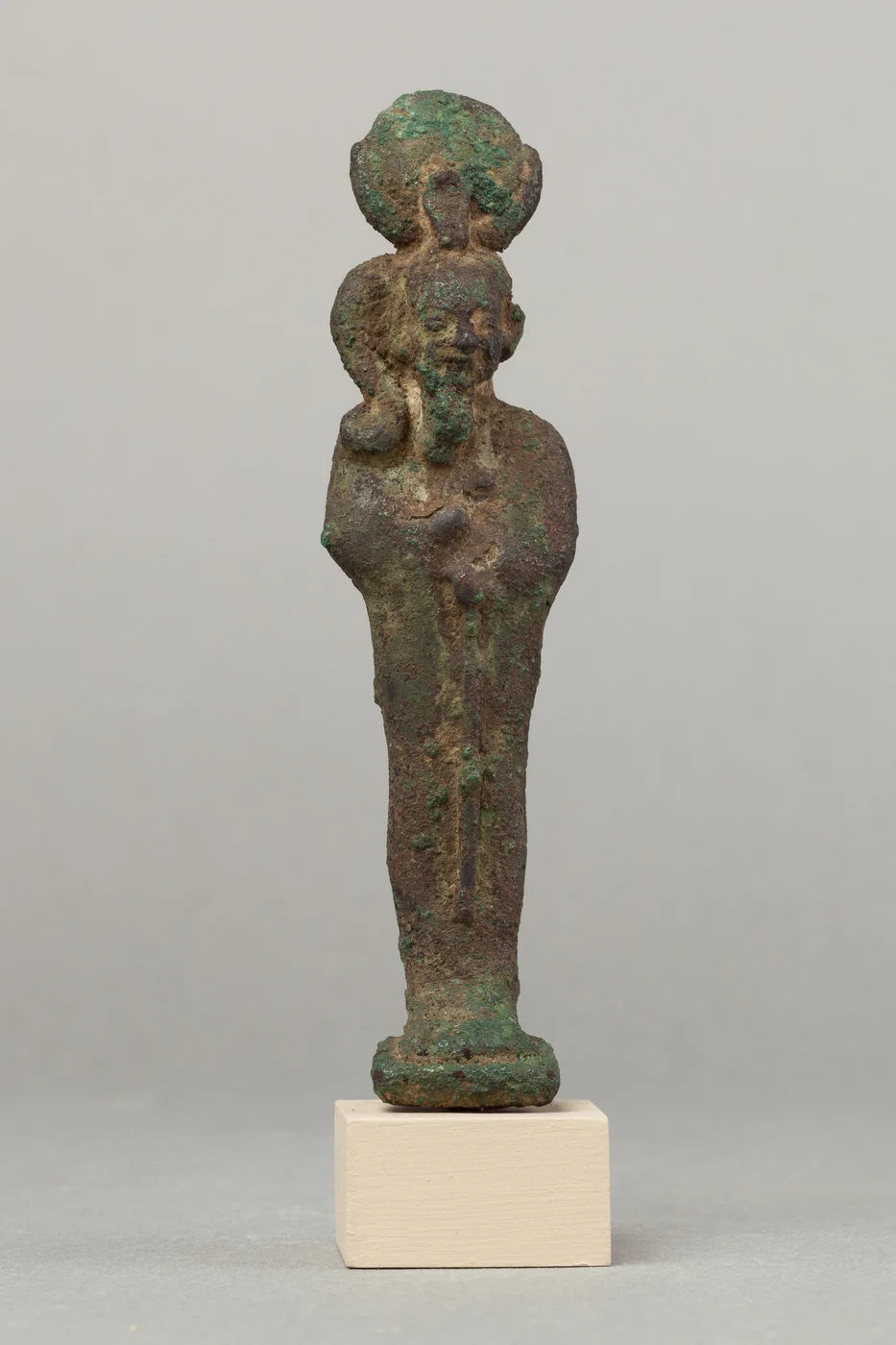
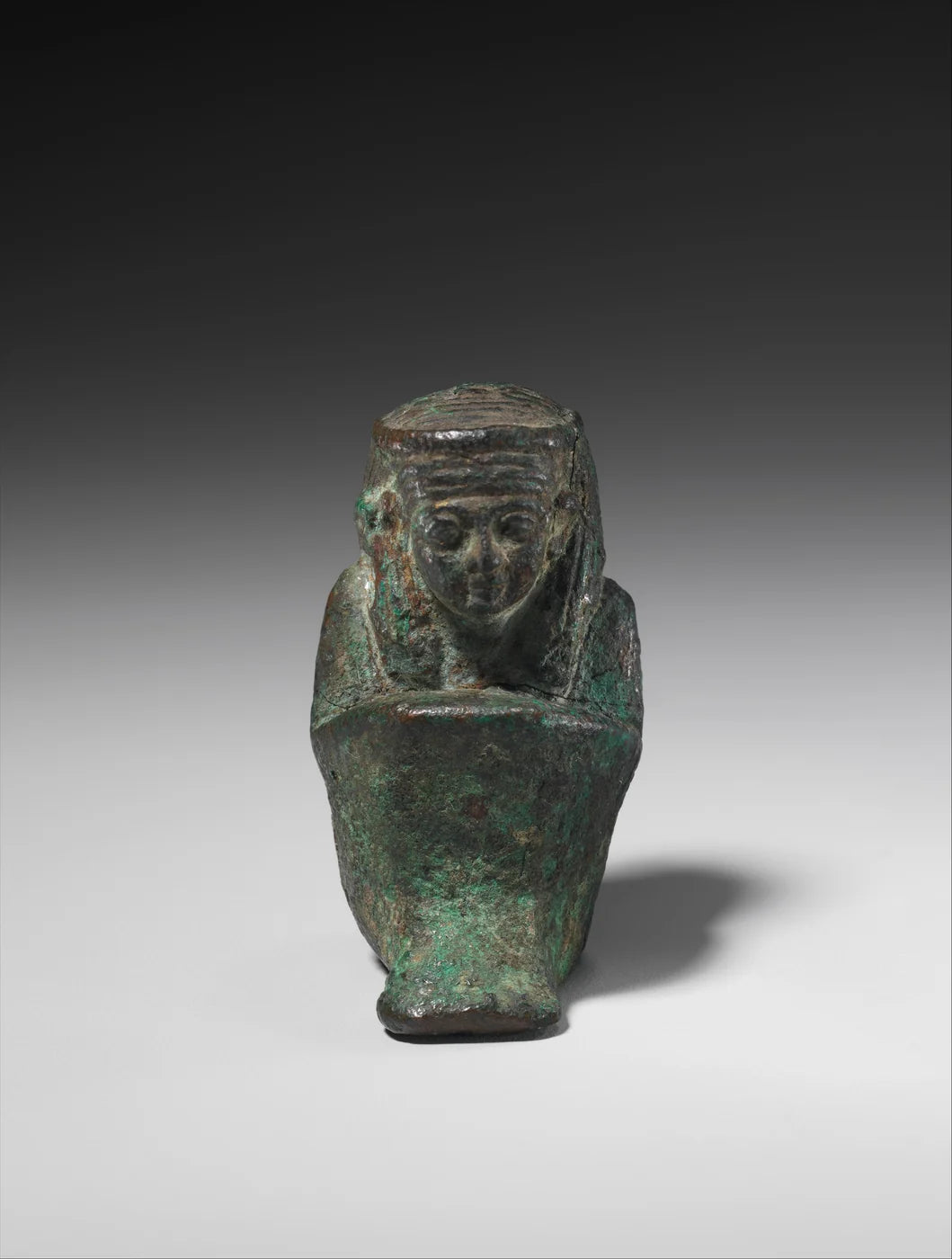
Thoth was associated with writing, knowledge, reckoning and the moon. He could be represented as an ibis, an ibis-headed man or a baboon. In scenes of the weighing of the heart, he records the outcome while other deities attend to the scales and judgment.
Take a closer look ↓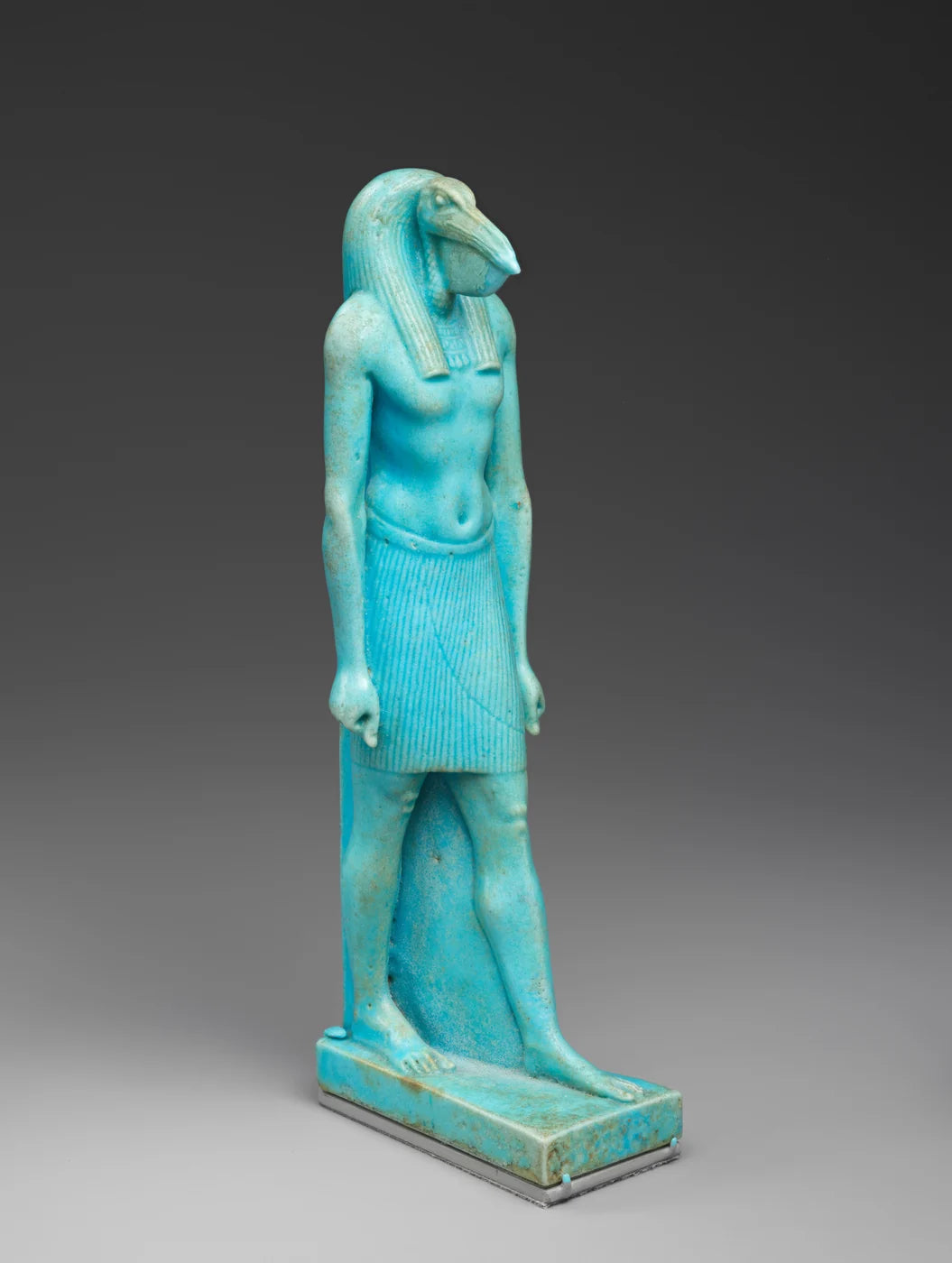
Written in signs
Name & hieroglyphs
- Transliteration
- Ḏḥwtj
- Familiar names & readings
- Djehuty / Djehuti / Thoth
One documented spelling, shown in a simple left-to-right line. Ancient spellings and the arrangement of signs varied. Transliteration records consonants; familiar readings supply conventional vowels.
Thoth is the familiar Greek-derived name; the Egyptian name is transliterated ḏḥwtj and conventionally read Djehuty or Djehuti. A single ibis-on-a-standard sign can write the whole name, as in the dictionary spelling shown here.
The name is traditionally connected with the ibis and is often explained as “he who is like the ibis.” That explanation is an interpretation of its derivation, not a translation of “god of wisdom.” The letters dj and kh in conventional Egyptian names represent particular consonants; the added vowels make the names easier to say today.
01 / The story
What was Thoth the god of?
Thoth brings together skills that can seem separate today: writing, keeping records, calculation and the observation of time. These activities made sense together in a culture where calendars, offerings, administration and ritual all depended on careful reckoning.
His lunar associations also belong to that world of measurement. The changing moon offers a visible rhythm in the sky. Thoth’s identity extends well beyond the modern shorthand ‘god of wisdom’, encompassing the practical work of recording and ordering.
02 / The story
The ibis and the divine scribe
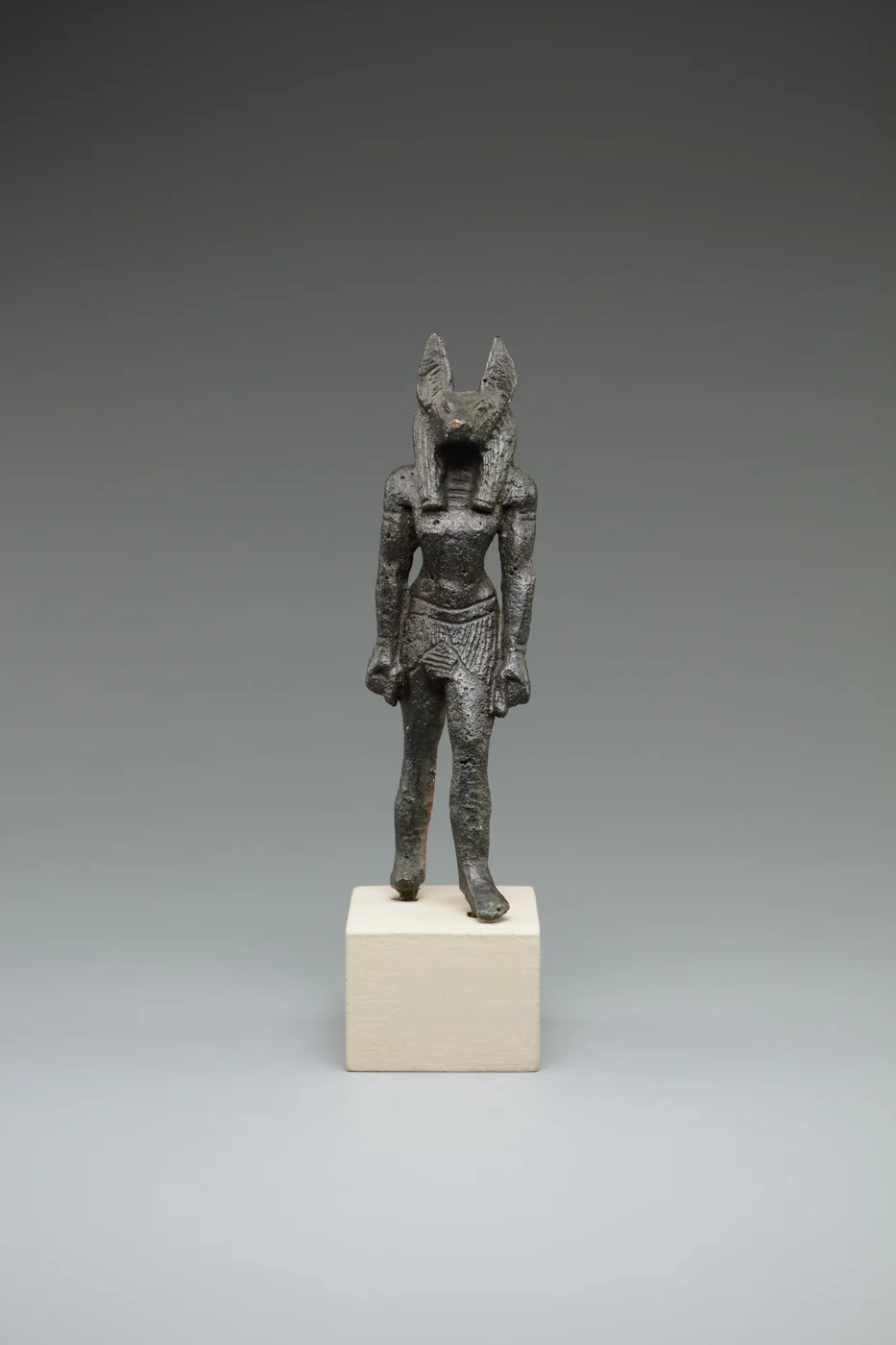
The long, curved bill makes an ibis-headed figure easy to recognise. In the sculpture shown here, an animal head joins a human body in the familiar standing pose of Egyptian divine figures. Thoth can also appear as a complete ibis or a baboon, so an ibis head is not his only form.
Look for him in scenes of the weighing of the heart. Anubis tends the weighing, while Thoth records its result. Reading their different actions is more useful than grouping all the figures together as generic gods of the afterlife.
Train your eye
Three details to notice.
A curved ibis bill
The long downward-curving beak distinguishes an ibis from the shorter hooked beak of a falcon.
A scribe’s role
Writing or recording in a judgment scene is a strong contextual clue.
Another animal form
A baboon can also evoke Thoth. Egyptian deities did not have one fixed appearance.
A little more understanding
Good questions.
Clear answers.
Why does Thoth have an ibis head?
The ibis was one of his principal sacred animal forms. Egyptian images use animal features to express divine identity rather than to portray an ordinary human body.
Are Thoth and Khonsu the same moon god?
No. Both have lunar associations, but they are distinct deities with their own imagery, traditions and relationships.
Does Thoth weigh the heart?
In the familiar judgment scene he records the outcome. Anubis attends to the scales, and Osiris presides over the realm of the dead.
What does Djehuty mean?
Djehuty is a conventional reading of Thoth’s Egyptian name. It is traditionally interpreted in connection with the ibis, often as “he who is like the ibis.”
Can a single hieroglyph spell Thoth’s name?
Yes. An ibis on a standard can stand for the complete divine name. Hieroglyphs can write whole words as well as individual consonants or groups of sounds.
Why is Thoth connected with the moon?
His lunar identity belongs with his associations with reckoning and time. The moon’s changing appearance provides a visible rhythm for counting and calendars.
Why is Thoth sometimes a baboon?
The baboon is another established animal form of Thoth. Egyptian gods could appear in several forms, each used within particular artistic and religious settings.
Was Thoth only a god of wisdom?
His roles were more specific and varied: writing, records, calculation, time and divine judgment. “God of wisdom” is a useful introduction, but it leaves much out.
From the library to your home
Keep the story close.
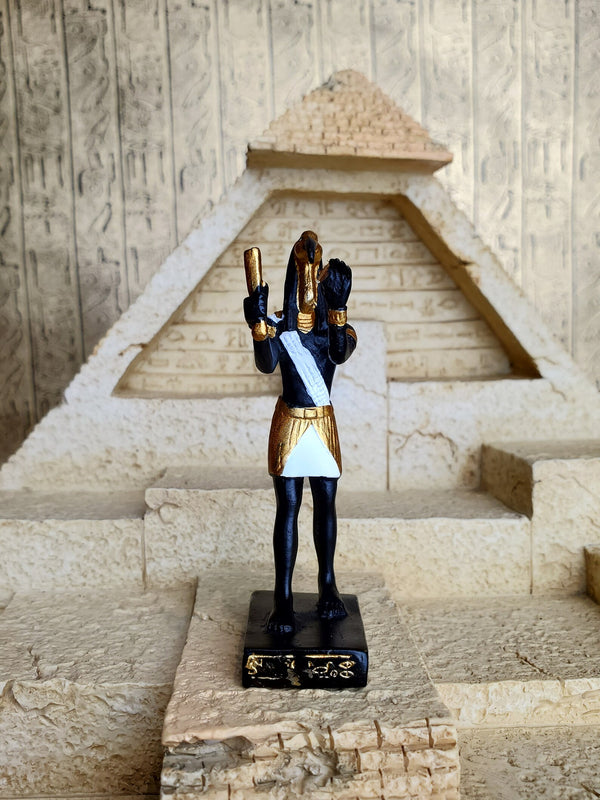
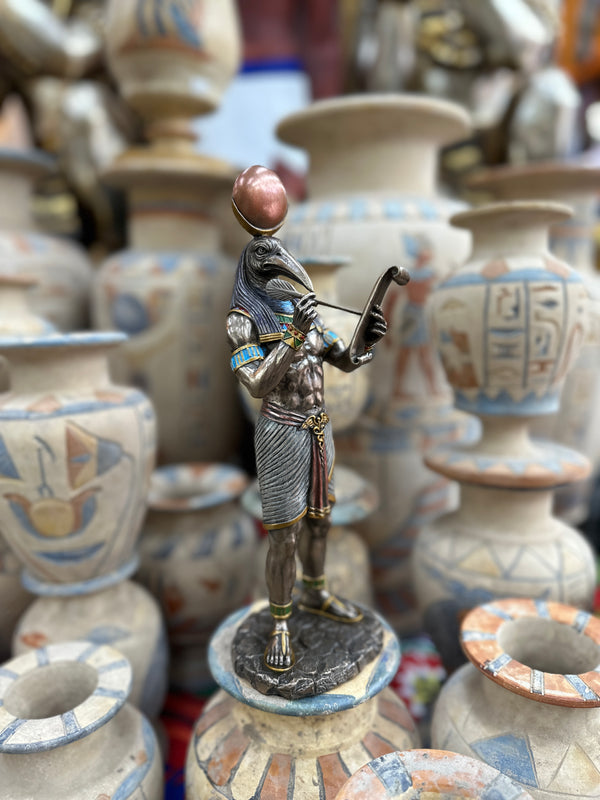
Explore pieces in our shop connected with this subject. The museum objects above are historical references; shop items have their own materials and descriptions.
Explore the Thoth collection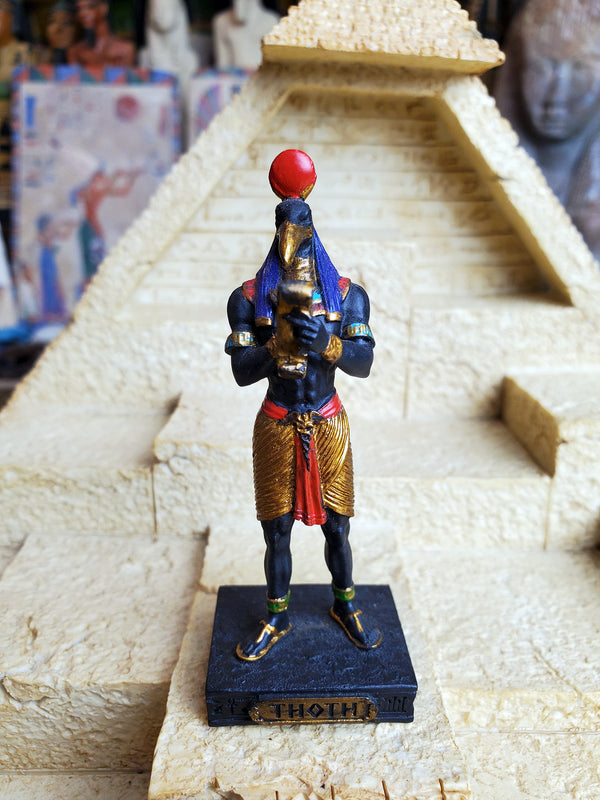
Follow the connections
There’s more to this story.
The evidence behind the entry
Bibliography & image credits
Museum records, language references and published research used for this entry. Name spellings and interpretations are documented here alongside the historical sources.
- Rosicrucian Egyptian Museum — Thoth
- The Met — Striding Thoth
- Thesaurus Linguae Aegyptiae — Ḏḥwtj, lemma 185290 (accessed 20 October 2026)
Photograph: Striding Thoth, The Metropolitan Museum of Art, 26.7.860. Purchase, Edward S. Harkness Gift, 1926. CC0 / Public domain. Resized for display; the complete photograph is preserved.